 Open
OpenAbduction of a Sabine Woman
Giambologna · model ca. 1579; cast possibly late 16th century · held by The Metropolitan Museum of Art · United States jurisdiction only
isPublicDomaintrue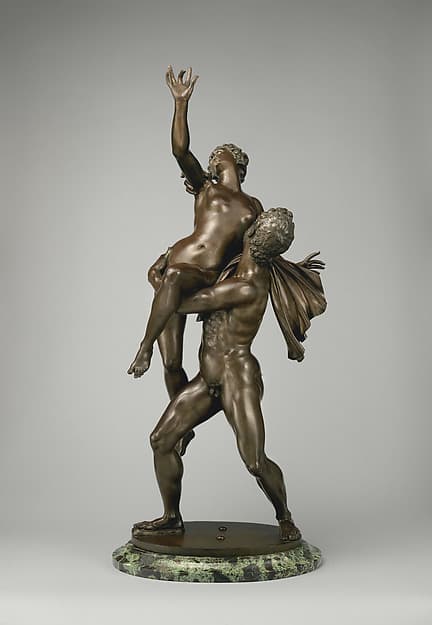
What this status means
The Met publishes a single boolean, isPublicDomain, representing the museum's own determination that the work it holds is free of copyright. It is the museum's assessment of the object, not a court ruling, and it does not speak to trademark, to the rights in any later reproduction or restoration, or to any jurisdiction outside the United States.
Where the status came from
OpenGlyph holds no verdict of its own for this object. It queried The Met Collection API (Open Access) and read isPublicDomain, which returned true. If that field had said anything else, the record would not have rendered at all — non-qualifying objects are dropped before a page exists for them.
That query ran at 2026-08-26 17:02 UTC — during this request. The answer is now kept for 24 hours and replayed for anyone who opens this record again, so a later view may show an earlier timestamp than its own. A request that fails is never kept, so an archive outage can never be replayed as though it were a rights determination.
What this does not cover
Copyright only, and only in the United States. It says nothing about trademark, which is a separate regime that survives a work leaving copyright. It covers the file the archive published, not later restorations, colourisations, crops, or reproductions, each of which can carry a new copyright of its own. Outside the US, most countries measure from the life of the author rather than a fixed publication date, so the answer can differ.
This is a reading of one archive’s published rights field, taken at the time recorded in the margin. It is not a legal opinion and not a clearance. Institutions revise their own determinations. Verify against the object page linked in the margin before relying on this commercially.
The download link points at the archive’s own file, served from images.metmuseum.org — OpenGlyph does not re-host it, re-encode it, or strip its provenance.