 Open
OpenTwo archives, queried live.
Every record below comes from The Met or Smithsonian Open Access and was filtered on that archive’s own rights field before it reached this page. 12 shown for “'Abdullah ibn al-Fadl” — 24 records examined, 6 dropped by the rights gate.
Archives queried 2026-08-26 13:13 UTC · fetched live for this request
isPublicDomain field is true for this object.metadata_usage.access reads CC0 — a waiver, not an expired term.Smithsonian Open Access: HTTP 429 from api.si.edu. Results from the remaining archive are shown unchanged — nothing is substituted for a source that did not answer.
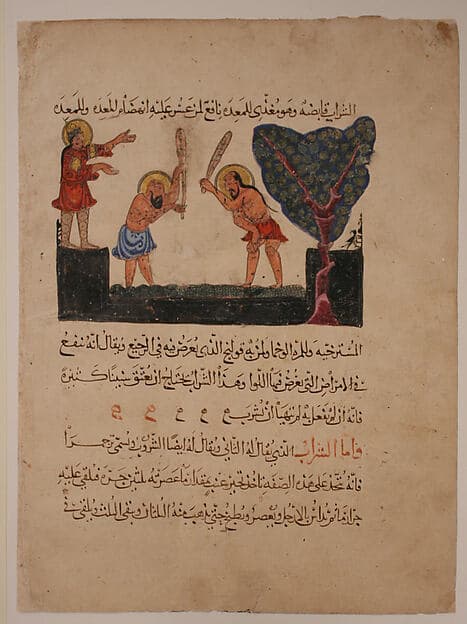
"Men Treading Grapes", Folio from a Materia Medica of Dioscorides
'Abdullah ibn al-Fadl · dated 621 AH/1224 CE
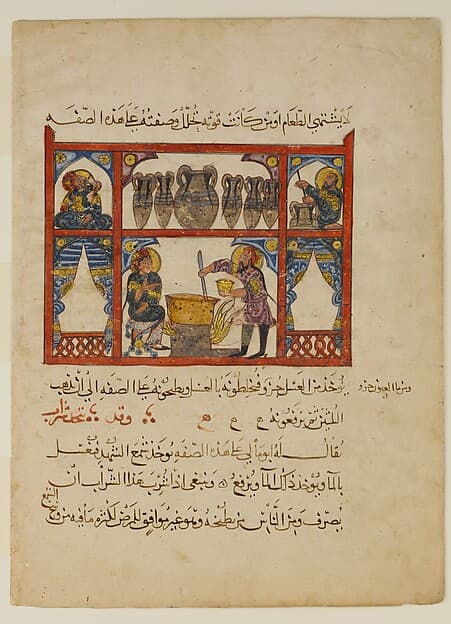
"Preparing Medicine from Honey", from a Dispersed Manuscript of an Arabic Translation of De Materia Medica of Dioscorides
'Abdullah ibn al-Fadl · dated 621 AH/1224 CE
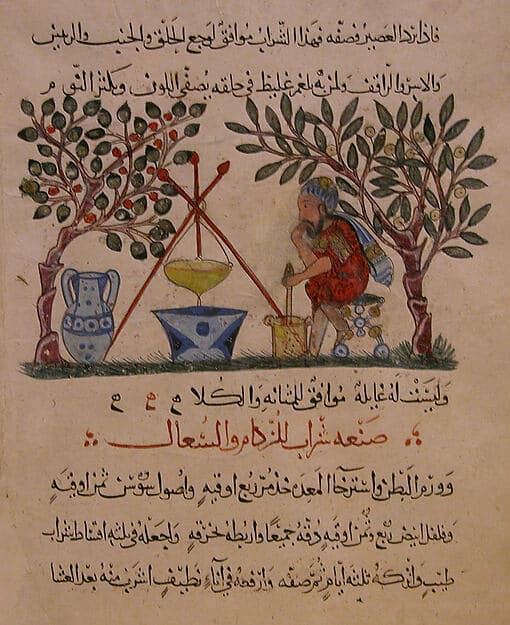
"Physician Preparing an Elixir", Folio from a Materia Medica of Dioscorides
'Abdullah ibn al-Fadl · dated 621 AH/1224 CE
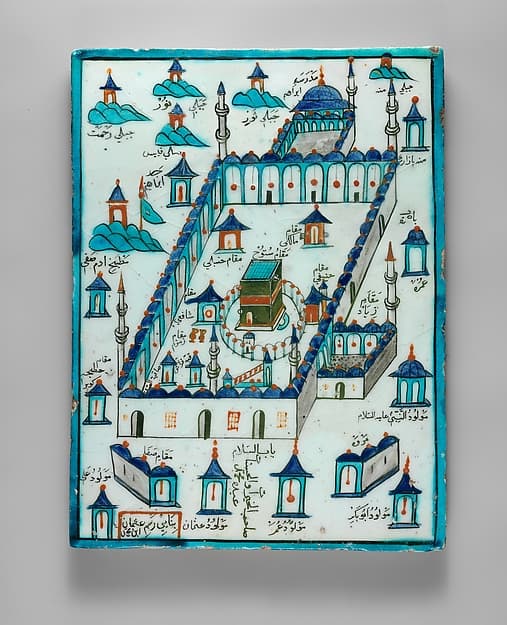
Ka'ba Tile
Osman Ibn Mehmed · ca. 1720–30
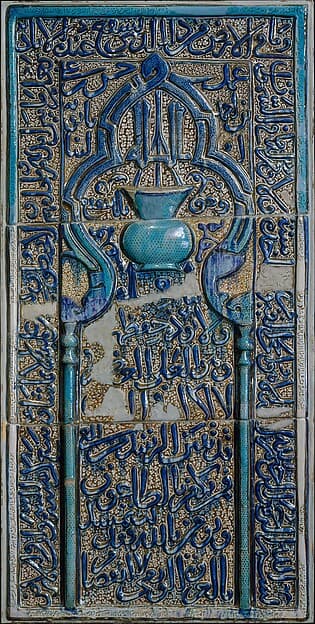
Tile Panel in the form of an Architectural Niche
Hasan ibn `Ali ibn Ahmad Babavaih · first half 14th century
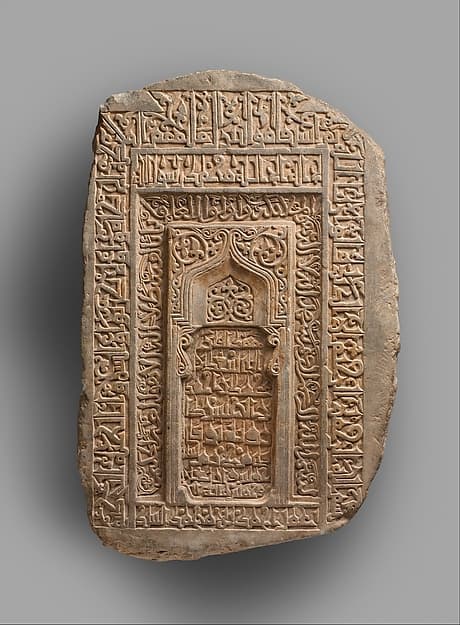
Tombstone of Abu Sa'd ibn Muhammad ibn Ahmad al-Hasan Karwaih
Ahmad ibn Muhammad Astak · dated 545 AH/1150 CE
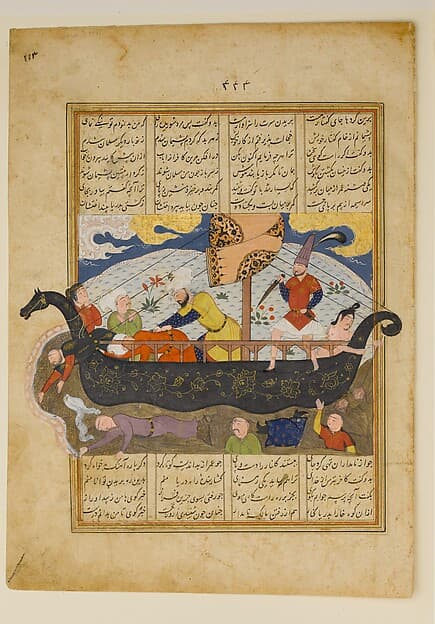
"Amr has the Infidels Thrown into the Sea", Folio from a Khavarannama (The Book of the East) of ibn Husam al-Din
Maulana Muhammad Ibn Husam ad Din · ca. 1476–86
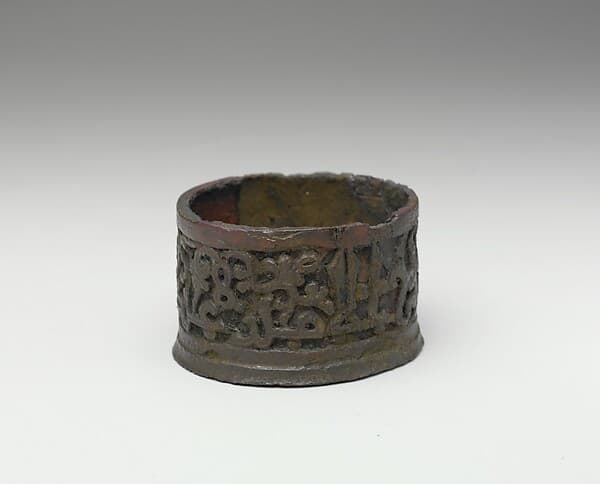
Inkwell with the Name of Amir 'Abdullah ibn al-Hasan Pars
Artist not stated in the record · probably 11th century
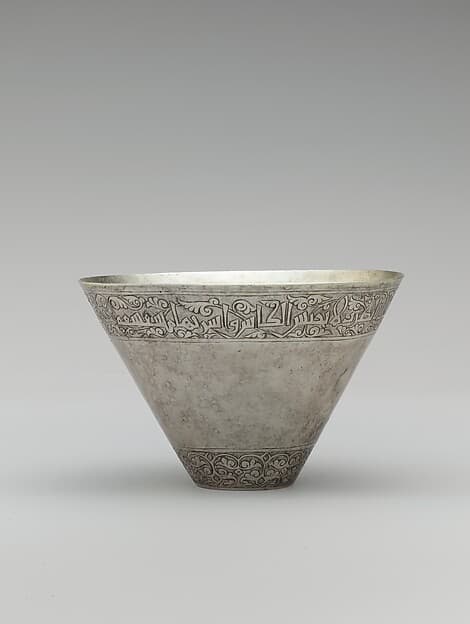
Cup with a Poem on Wine
Ibn Sukkara al-Hashimi · second half 10th–11th century
![Gravestone of Muhammad ibn Abi Bakr, died Shawwal 532 A.H. [June/July 1138 A.D.]](/_next/image?url=https%3A%2F%2Fimages.metmuseum.org%2FCRDImages%2Fis%2Fweb-large%2FDP353093.jpg&w=3840&q=75)
Gravestone of Muhammad ibn Abi Bakr, died Shawwal 532 A.H. [June/July 1138 A.D.]
Artist not stated in the record · dated 532 AH/1138 CE
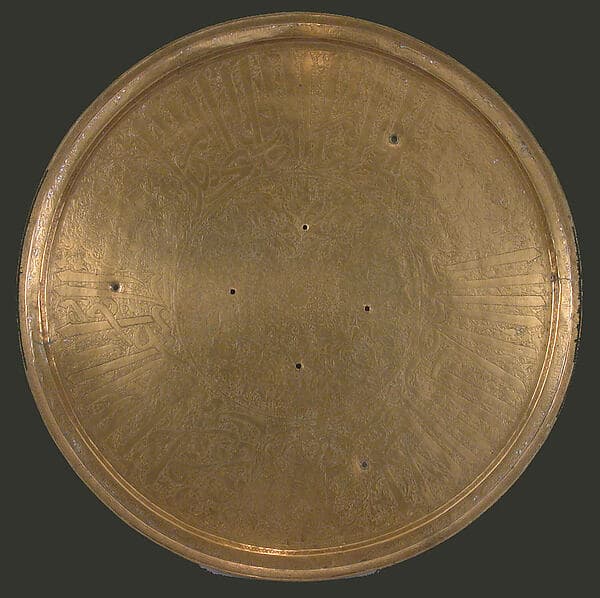
Tray of Yemeni Sultan al-Mu'ayyad ibn Yusuf
Ahmad ibn Husayn al-Mosuli · ca. 1296–1321
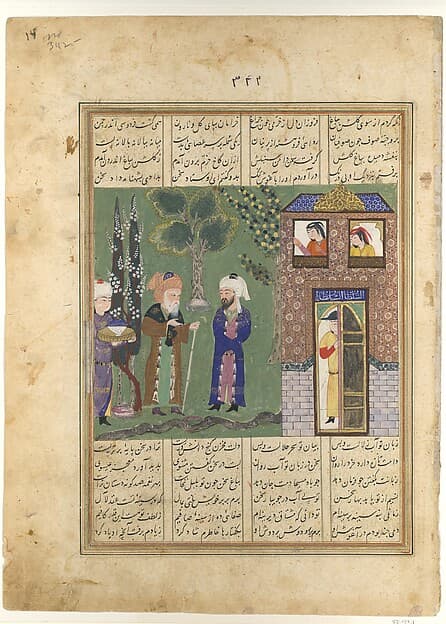
"Three Men Before a Castle", Folio from a Khavarannama (The Book of the East) of ibn Husam al-Din
Maulana Muhammad Ibn Husam ad Din · ca. 1476–86
Where these records came from.
Two archives are wired, and only two. Each one is filtered on its own rights field — never on a title match, and never on the presence of an image file.
- The Met Collection API (Open Access)Rights field:
isPublicDomain. 33 matched · 24 examined · 6 dropped by the rights gate. Kept only where isPublicDomain === true and a file URL was published.12 shown - Smithsonian Open Access API (api.si.edu)Rights field:
content.descriptiveNonRepeating.metadata_usage.access. HTTP 429 from api.si.edu. No records from this archive are shown for this query.Unavailable
These figures describe the pass run at 2026-08-26 13:13 UTC, during this request. A completed pass is kept for 24 hours and replayed for an identical search, which is what keeps repeated queries inside Smithsonian’s 30-requests-per-hour allowance. A pass in which either archive failed to answer is never kept — an outage must not be replayed as though it were a finding about the catalogue.
Wikimedia Commons and the Library of Congress are deliberately not wired. Wikimedia was confirmed, on a live query, to return CC-BY material inside the same result set as genuine public domain works, and filtering it safely has not been designed yet. loc.gov was blocked by bot detection during the source evaluation, so its rights vocabulary has never been observed — and nothing here is built on a field nobody has read.
An image file is a rights claim. It never travels without its field.