 Open
OpenTwo archives, queried live.
Every record below comes from The Met or Smithsonian Open Access and was filtered on that archive’s own rights field before it reached this page. 24 shown for “Ambrotype of John H. Copeland in an embossed leather case” — 64 records examined, 16 dropped by the rights gate.
Archives queried 2026-08-27 21:39 UTC · fetched live for this request
isPublicDomain field is true for this object.metadata_usage.access reads CC0 — a waiver, not an expired term.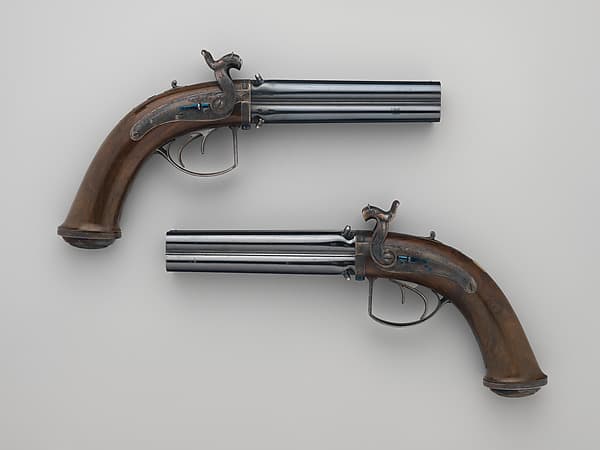
Pair of Four-Barreled Turnover Percussion Pistols of Henry Pelham Fiennes Pelham-Clinton, 4th Duke of Newcastle-under-Lyne (1785–1851), with Pair of Box-Lock Turn-Off Pocket Pistols, Case, and Accessories
James Purdey the Elder · 1831

Ambrotype of John H. Copeland in an embossed leather case
Artist not stated in the record · ca. 1860
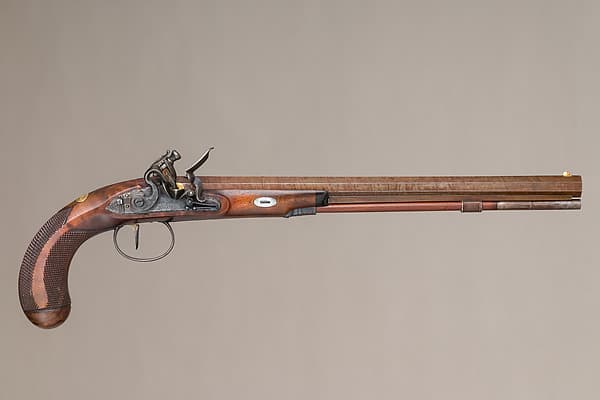
Flintlock Target Pistol of Prince William Frederick, Second Duke of Gloucester and Edinburgh (1776–1834), with Case and Accessories
Wogdon & Barton · 1801–3

Ambrotype of Ann Hurst Copeland in an embossed leather case
Artist not stated in the record · ca. 1860
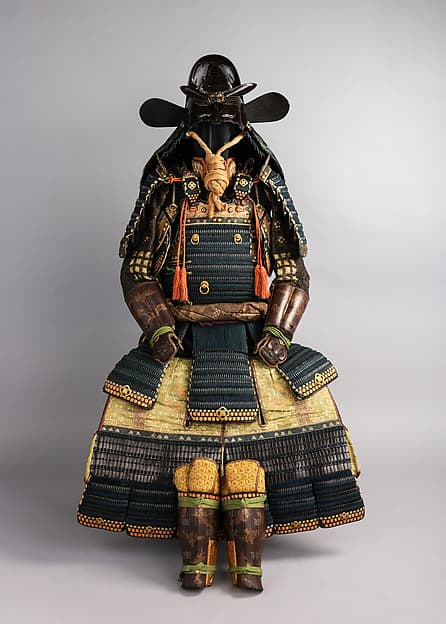
Armor (Gusoku) with Box
Neo Masanobu 根尾正信 · 19th century; helmet bowl, early 18th century

Ambrotype of a man
Unidentified · ca. 1850
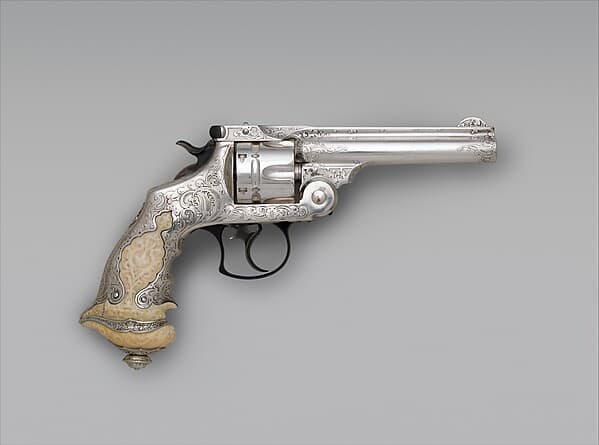
Smith and Wesson .44 Double-Action Revolver for George Jay Gould (1864–1923), serial no. 23402, with Case and Cleaning Brush
Smith & Wesson · 1888–89

Ambrotype portrait of Creed Miller with star-shaped military identification pin
Unidentified · 1864
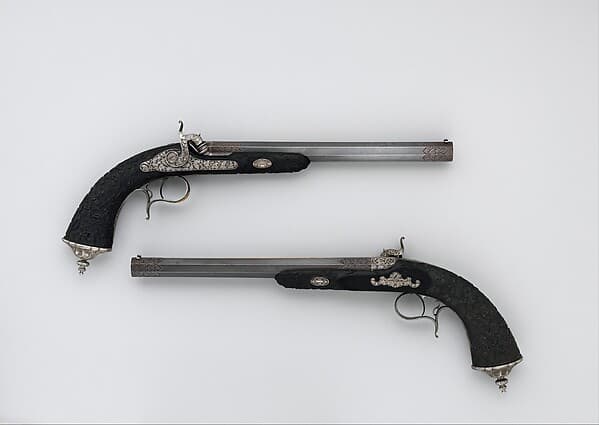
Cased Pair of Percussion Pistols with Accessories
Louis-Julien Gastinne-Renette · dated 1856

Ambrotype of Frederick Douglass
Unidentified · 1855-1865
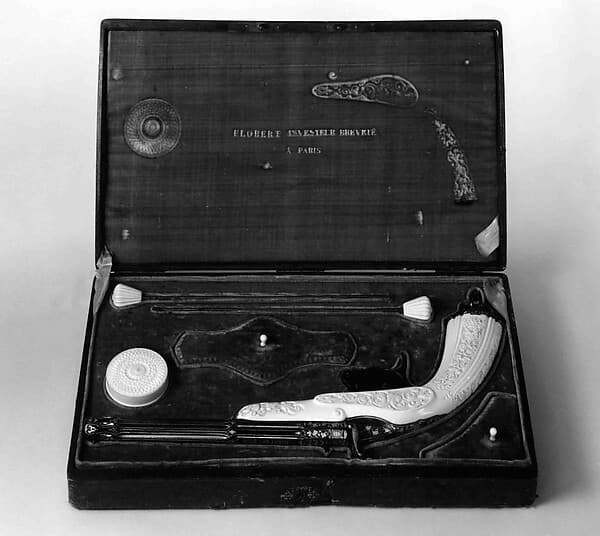
Breech-Loading Rimfire Cartridge Pistol with Case and Accessories
Louis Nicolas Auguste Flobert · ca. 1855

Ambrotype of a woman seated with a hat in her lap
Unidentified · mid-19th century
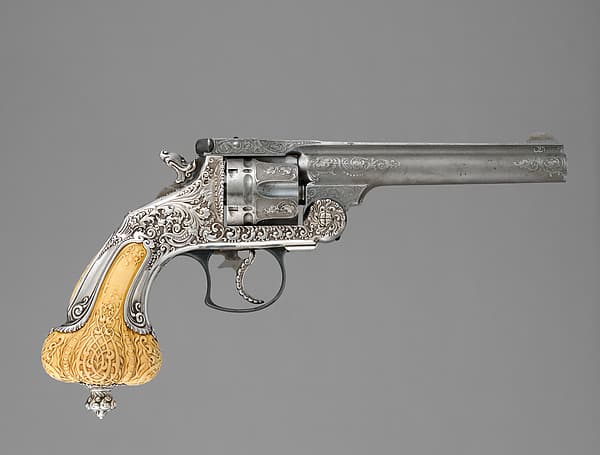
Smith & Wesson .44 Double-Action Frontier Model Revolver decorated by Tiffany & Co. (serial no. 8401), with Case and Cleaning Rod
Smith & Wesson · ca. 1893

Ambrotype of three women in dotted calico dresses
Artist not stated in the record · 1850-1870
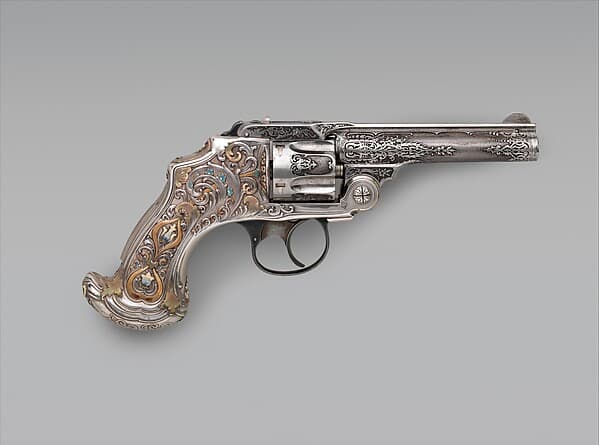
Smith and Wesson .38 Caliber Safety Third Model Double-Action Revolver, serial no. 83097, with Case
Smith & Wesson · 1892–93

Daguerreotype of William Lloyd Garrison
Artist not stated in the record · ca. 1860
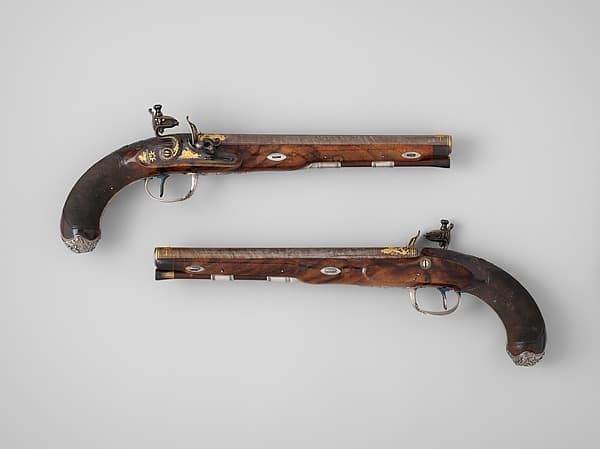
Pair of Flintlock Pistols of the Prince of Wales, later George IV (1762–1830), with Case and Accessories
Durs Egg · hallmarked for 1787–88

Daguerreotype of a man taken by Augustus Washington
Augustus Washington, American, 1821 - 1875 · ca. 1850
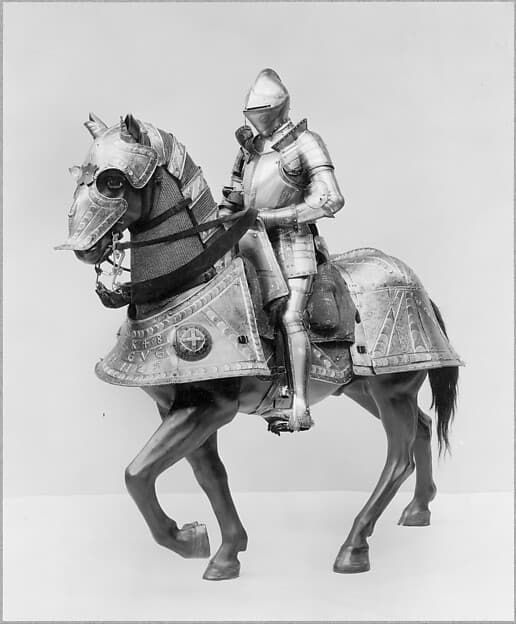
Horse Armor Made for Johann Ernst, Duke of Saxony-Coburg (1521–1553)
Kunz Lochner · dated 1548

Ambrotype of a man
Artist not stated in the record · ca. 1855
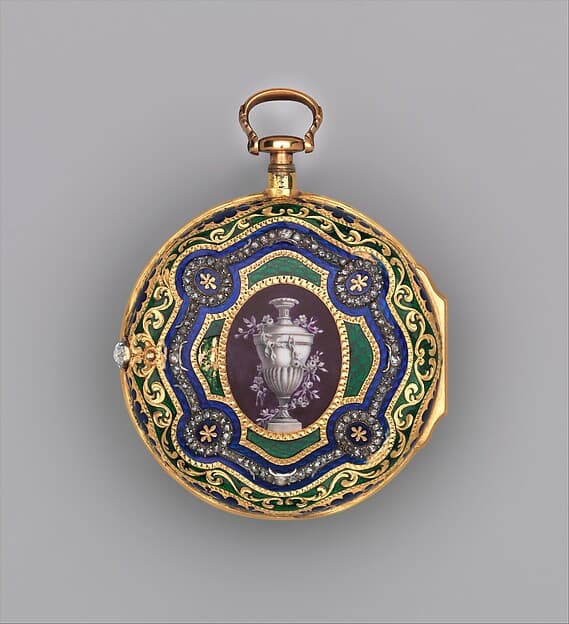
Watch case
George Harrison · probably ca. 1770
Ambrotype of Elisa Greenwell with handwritten note
Artist not stated in the record · early 1860s
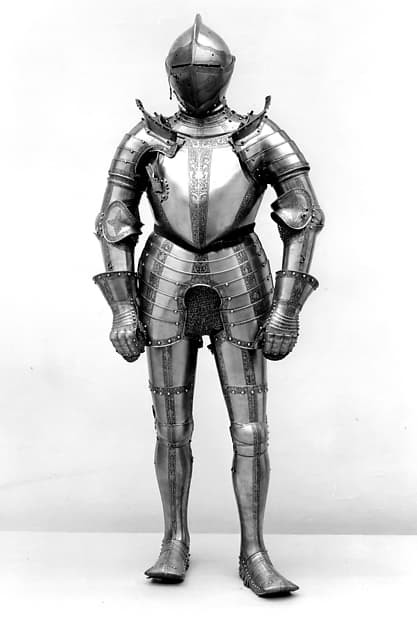
Armor from a Small Garniture for Field and Tournament
Kunz Lochner · dated 1548, with later restorations

Ambrotype of an unidentified woman and child
Unidentified · ca. 1860
Where these records came from.
Two archives are wired, and only two. Each one is filtered on its own rights field — never on a title match, and never on the presence of an image file.
- The Met Collection API (Open Access)Rights field:
isPublicDomain. 53 matched · 24 examined · 0 dropped by the rights gate. Kept only where isPublicDomain === true and a file URL was published.12 shown - Smithsonian Open Access API (api.si.edu)Rights field:
content.descriptiveNonRepeating.metadata_usage.access. 7483516 matched · 40 examined · 16 dropped by the rights gate. Kept only where metadata_usage.access === "CC0" and an image resource was published.12 shown
These figures describe the pass run at 2026-08-27 21:39 UTC, during this request. A completed pass is kept for 24 hours and replayed for an identical search, which is what keeps repeated queries inside Smithsonian’s 30-requests-per-hour allowance. A pass in which either archive failed to answer is never kept — an outage must not be replayed as though it were a finding about the catalogue.
Wikimedia Commons and the Library of Congress are deliberately not wired. Wikimedia was confirmed, on a live query, to return CC-BY material inside the same result set as genuine public domain works, and filtering it safely has not been designed yet. loc.gov was blocked by bot detection during the source evaluation, so its rights vocabulary has never been observed — and nothing here is built on a field nobody has read.
An image file is a rights claim. It never travels without its field.