 Open
OpenTwo archives, queried live.
Every record below comes from The Met or Smithsonian Open Access and was filtered on that archive’s own rights field before it reached this page. 23 shown for “Four silver spoons” — 64 records examined, 5 dropped by the rights gate.
Archives queried 2026-08-27 20:54 UTC · fetched live for this request
isPublicDomain field is true for this object.metadata_usage.access reads CC0 — a waiver, not an expired term.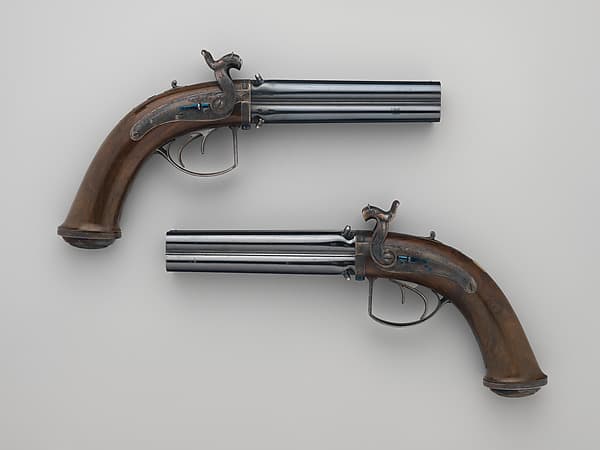
Pair of Four-Barreled Turnover Percussion Pistols of Henry Pelham Fiennes Pelham-Clinton, 4th Duke of Newcastle-under-Lyne (1785–1851), with Pair of Box-Lock Turn-Off Pocket Pistols, Case, and Accessories
James Purdey the Elder · 1831
spoon bowl
Artist not stated in the record · late 17th century
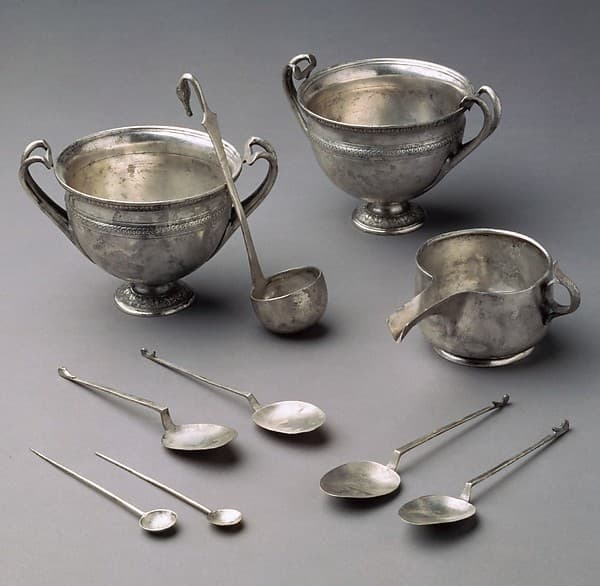
Four silver spoons
Artist not stated in the record · mid-1st century BCE

Spoon
Phillipe Berthier, French, active Paris 1841-1851 · mid-19th century
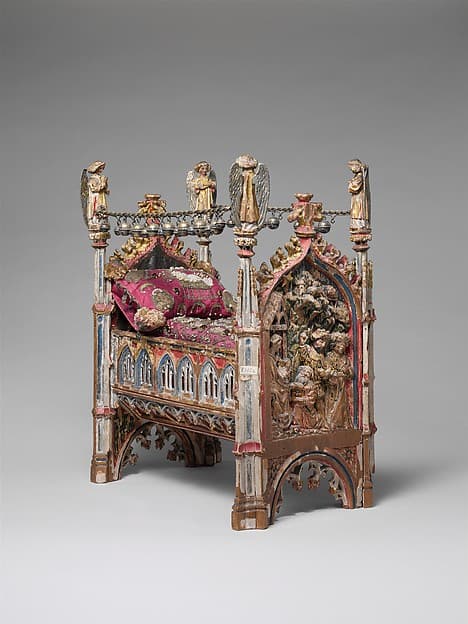
Crib of the Infant Jesus
Artist not stated in the record · 15th century
Folding spoon
Gavet Coutelier, France · 1809–19
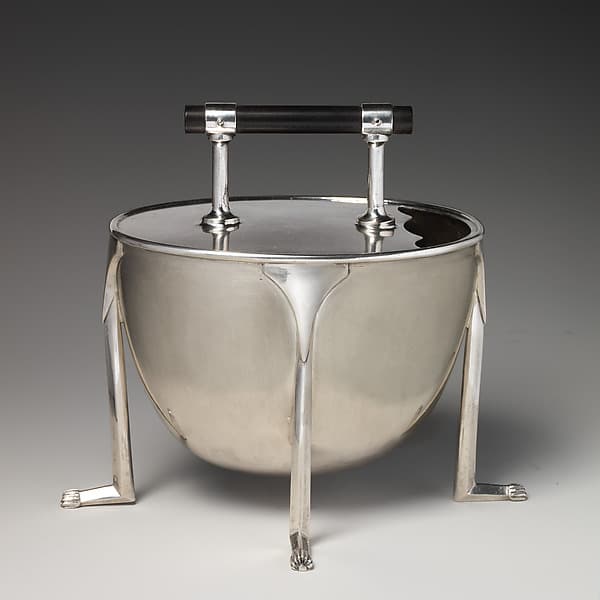
Spoon holder
Christopher Dresser · ca. 1878–81

Sifting Spoon
Artist not stated in the record · late 19th century
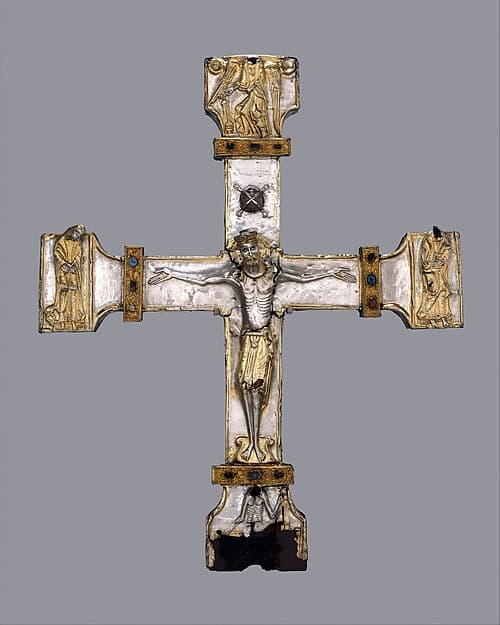
Processional Cross
Artist not stated in the record · ca. 1150–75

Designs for Silver Serving Pieces
Pietro Belli, Italian, 1780–1828 · early 19th century
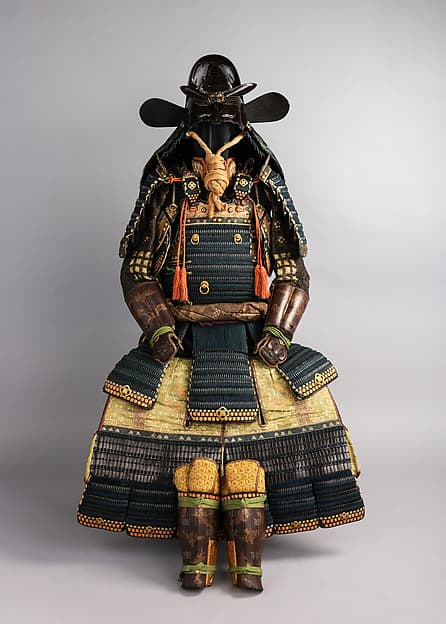
Armor (Gusoku) with Box
Neo Masanobu 根尾正信 · 19th century; helmet bowl, early 18th century

spoon
Lambert & Jozan, Veuve · 1850–1900
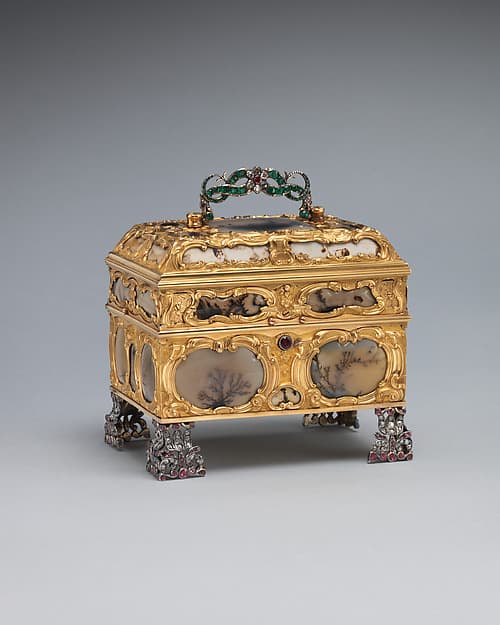
Nécessaire
James Cox · ca. 1770–72

Spoon with Twisted Stem
Erik Barck, 1697 – 1718 · ca. 1715
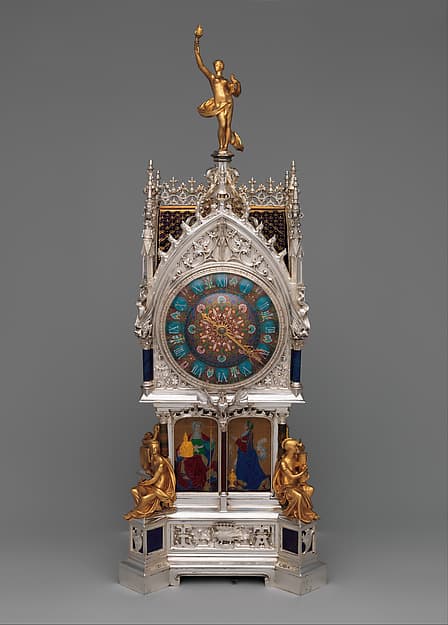
Table clock with calendar
Lucien Falize · 1881

Folding Spoon with Engraved Floral Decoration and Lion Cartouche
Artist not stated in the record · ca. 1700
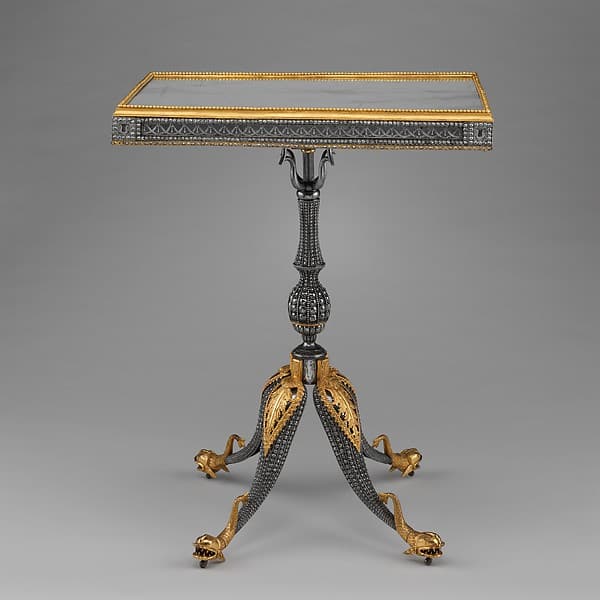
Center table
Imperial Armory, Tula (south of Moscow), Russia · ca. 1780–85

Dinner Knife from Rockledge Service
George Washington Maher, American, 1864–1926 · 1911–12
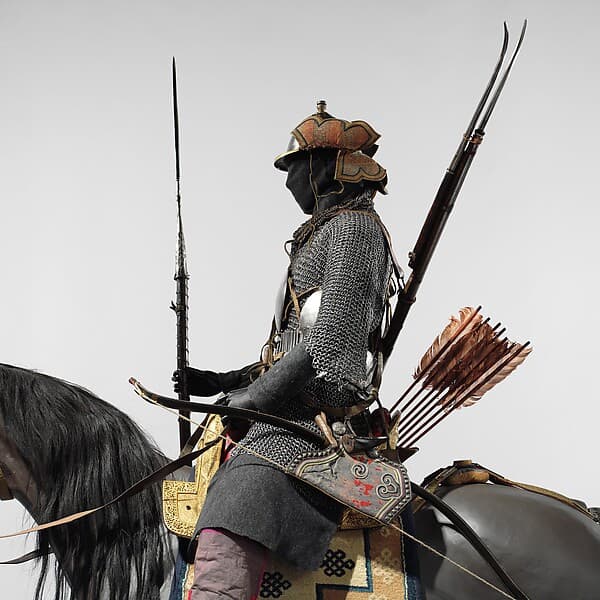
Armored Cavalryman
Artist not stated in the record · 18th–19th century

Luncheon Knife from Rockledge Service
George Washington Maher, American, 1864–1926 · 1911–12

Tea Caddy Spoon
Edward C. Moore (1827-1891) · late 19th century
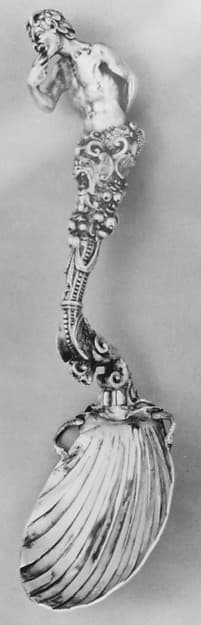
Spoon (one of a set)
Antonio Gentili (Antonio da Faenza) · late 16th century

Fork with Porcelain Handle (with Knife and Spoon)
Artist not stated in the record · ca. 1730
Where these records came from.
Two archives are wired, and only two. Each one is filtered on its own rights field — never on a title match, and never on the presence of an image file.
- The Met Collection API (Open Access)Rights field:
isPublicDomain. 3139 matched · 24 examined · 1 dropped by the rights gate. Kept only where isPublicDomain === true and a file URL was published.12 shown - Smithsonian Open Access API (api.si.edu)Rights field:
content.descriptiveNonRepeating.metadata_usage.access. 120871 matched · 40 examined · 4 dropped by the rights gate. Kept only where metadata_usage.access === "CC0" and an image resource was published.12 shown
These figures describe the pass run at 2026-08-27 20:54 UTC, during this request. A completed pass is kept for 24 hours and replayed for an identical search, which is what keeps repeated queries inside Smithsonian’s 30-requests-per-hour allowance. A pass in which either archive failed to answer is never kept — an outage must not be replayed as though it were a finding about the catalogue.
Wikimedia Commons and the Library of Congress are deliberately not wired. Wikimedia was confirmed, on a live query, to return CC-BY material inside the same result set as genuine public domain works, and filtering it safely has not been designed yet. loc.gov was blocked by bot detection during the source evaluation, so its rights vocabulary has never been observed — and nothing here is built on a field nobody has read.
An image file is a rights claim. It never travels without its field.