 Open
OpenTwo archives, queried live.
Every record below comes from The Met or Smithsonian Open Access and was filtered on that archive’s own rights field before it reached this page. 16 shown for “Gold Ornament from a Sword Grip” — 64 records examined, 37 dropped by the rights gate.
Archives queried 2026-09-05 09:26 UTC · fetched live for this request
isPublicDomain field is true for this object.metadata_usage.access reads CC0 — a waiver, not an expired term.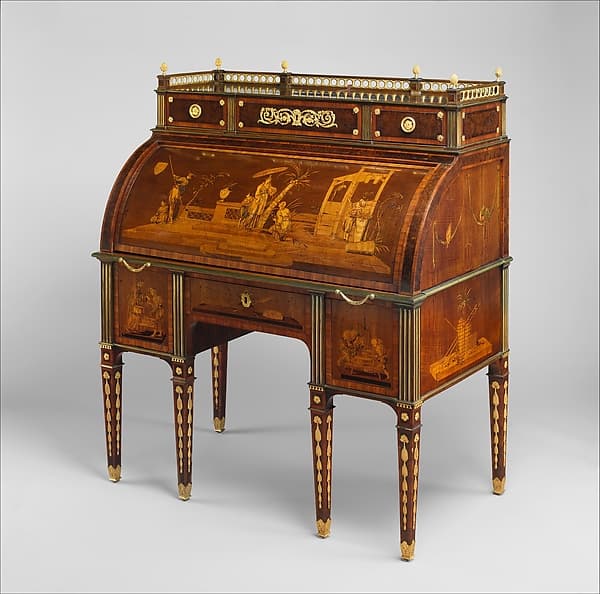
Rolltop desk
David Roentgen · ca. 1776–79

Design for Hilt and Guard of a Dress Sword
Artist not stated in the record · ca. 1780–90
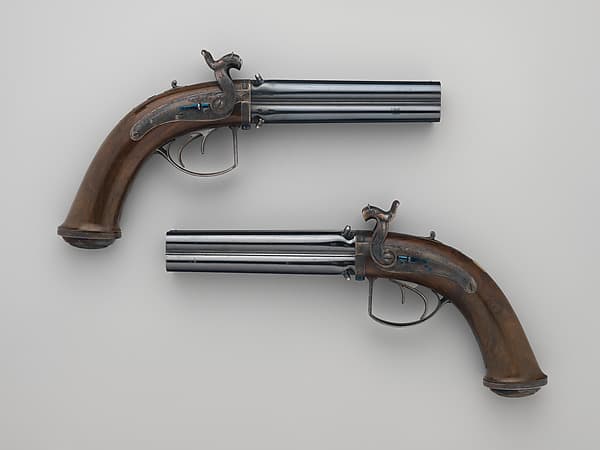
Pair of Four-Barreled Turnover Percussion Pistols of Henry Pelham Fiennes Pelham-Clinton, 4th Duke of Newcastle-under-Lyne (1785–1851), with Pair of Box-Lock Turn-Off Pocket Pistols, Case, and Accessories
James Purdey the Elder · 1831

Ornamental Medallion Designs
Théodore Bertren, active in France, 18th century · 1765-1768
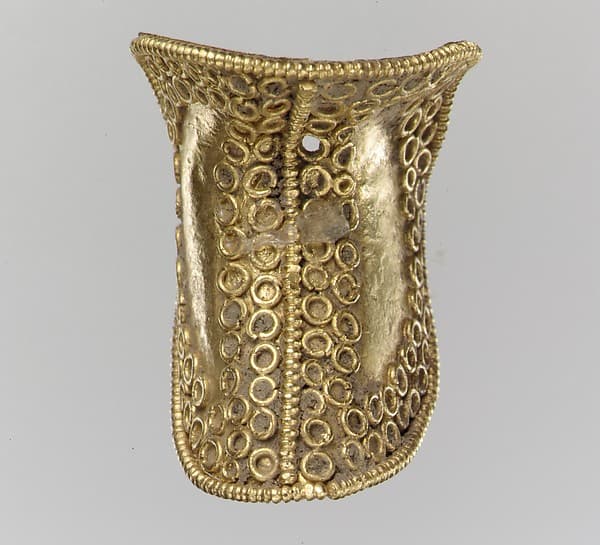
Gold Ornament from a Sword Grip
Artist not stated in the record · ca. 600

Toledo 1873 Presentation Sword
Artist not stated in the record · 1873
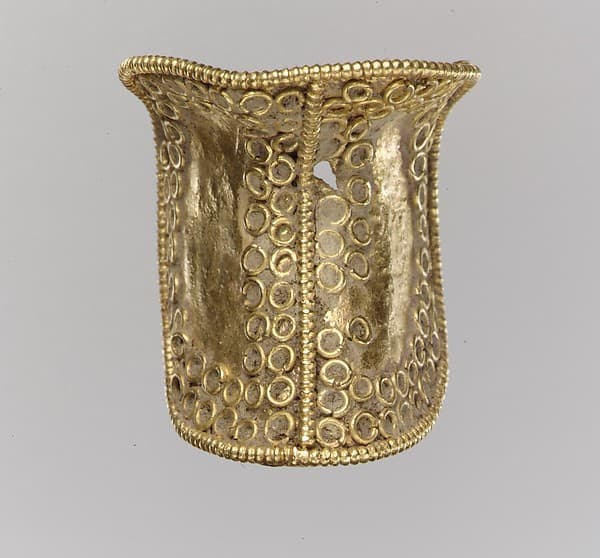
Gold Ornament from a Sword Grip
Artist not stated in the record · ca. 600

Dress Sword
Artist not stated in the record · ca 1775
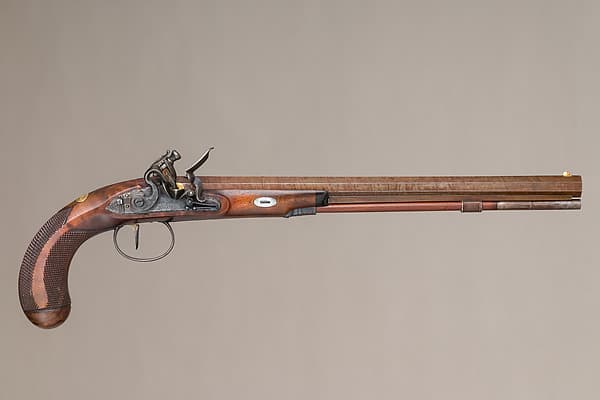
Flintlock Target Pistol of Prince William Frederick, Second Duke of Gloucester and Edinburgh (1776–1834), with Case and Accessories
Wogdon & Barton · 1801–3
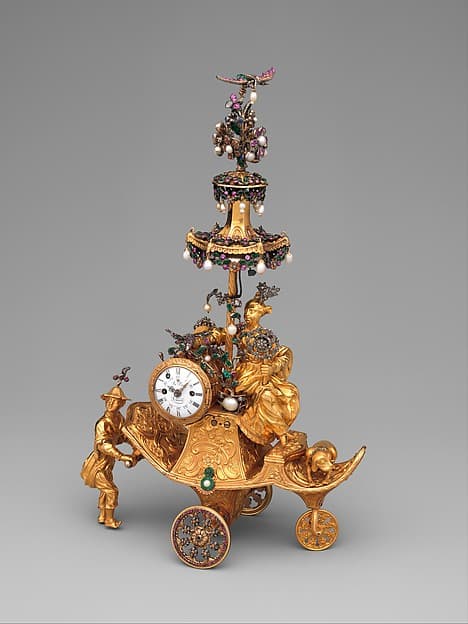
Automaton in the form of a chariot pushed by a Chinese attendant and set with a clock
James Cox · 1766
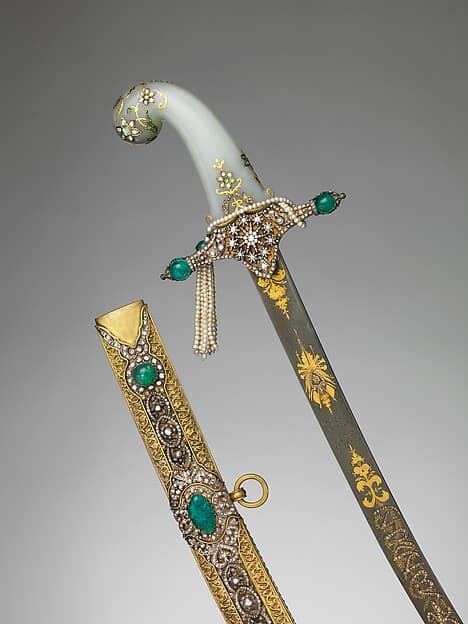
Saber with Scabbard
Artist not stated in the record · grip, 18th or 19th century; guard and scabbard, 19th century; blade, dated A.H. 1099/1688 CE; decoration on blade, 19th century
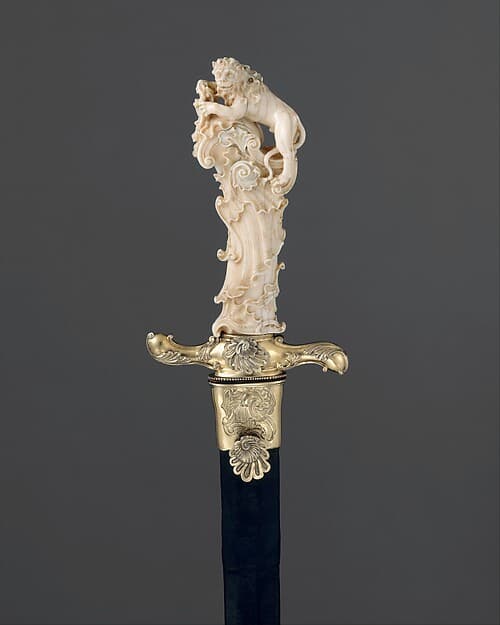
Hunting Sword with Scabbard
Joseph Deutschmann · ca. 1740
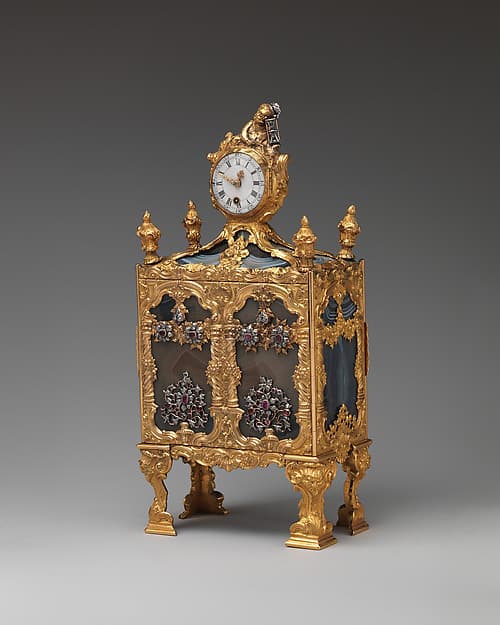
Nécessaire (one of a pair)
John Barbot · ca. 1760
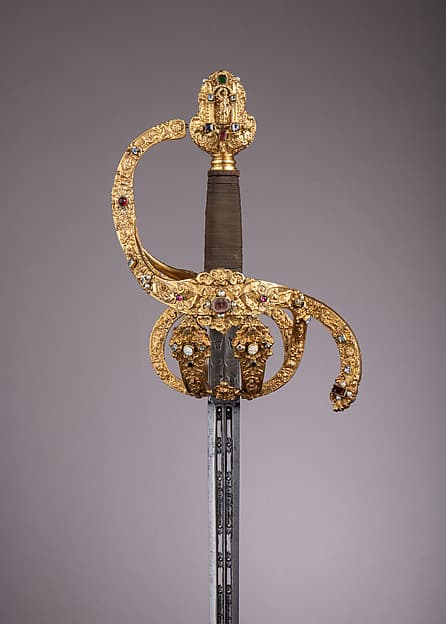
Rapier of Prince-Elector Christian II of Saxony (1583–1611)
Israel Schuech · dated 1606
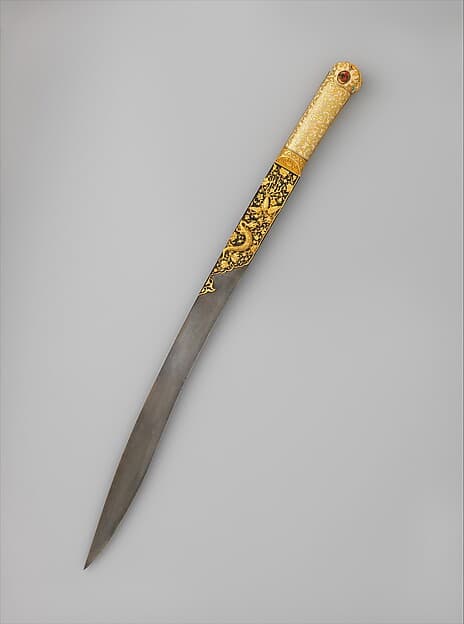
Short Sword (Yatagan) from the Court of Süleyman the Magnificent (reigned 1520–66)
Ahmed Tekelü · ca. 1525–30
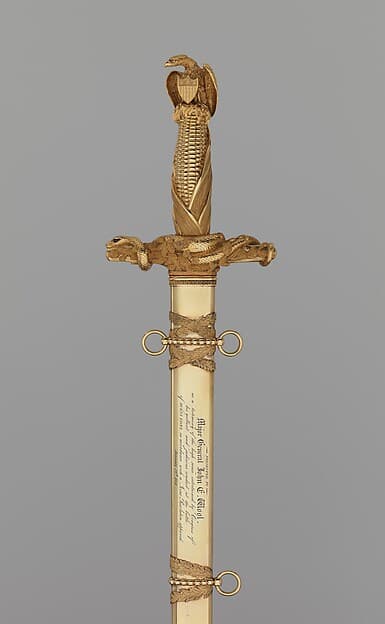
Congressional Presentation Sword and Scabbard of Major General John E. Wool (1784–1869)
Samuel Jackson · 1854–55
Where these records came from.
Two archives are wired, and only two. Each one is filtered on its own rights field — never on a title match, and never on the presence of an image file.
- The Met Collection API (Open Access)Rights field:
isPublicDomain. 4521 matched · 24 examined · 1 dropped by the rights gate. Kept only where isPublicDomain === true and a file URL was published.12 shown - Smithsonian Open Access API (api.si.edu)Rights field:
content.descriptiveNonRepeating.metadata_usage.access. 1972930 matched · 40 examined · 36 dropped by the rights gate. Kept only where metadata_usage.access === "CC0" and an image resource was published.4 shown
These figures describe the pass run at 2026-09-05 09:26 UTC, during this request. A completed pass is kept for 24 hours and replayed for an identical search, which is what keeps repeated queries inside Smithsonian’s 30-requests-per-hour allowance. A pass in which either archive failed to answer is never kept — an outage must not be replayed as though it were a finding about the catalogue.
Wikimedia Commons and the Library of Congress are deliberately not wired. Wikimedia was confirmed, on a live query, to return CC-BY material inside the same result set as genuine public domain works, and filtering it safely has not been designed yet. loc.gov was blocked by bot detection during the source evaluation, so its rights vocabulary has never been observed — and nothing here is built on a field nobody has read.
An image file is a rights claim. It never travels without its field.