 Open
OpenTwo archives, queried live.
Every record below comes from The Met or Smithsonian Open Access and was filtered on that archive’s own rights field before it reached this page. 23 shown for “Greenstone polyhedron inscribed with letters of the Greek alphabet” — 64 records examined, 31 dropped by the rights gate.
Archives queried 2026-09-04 14:04 UTC · fetched live for this request
isPublicDomain field is true for this object.metadata_usage.access reads CC0 — a waiver, not an expired term.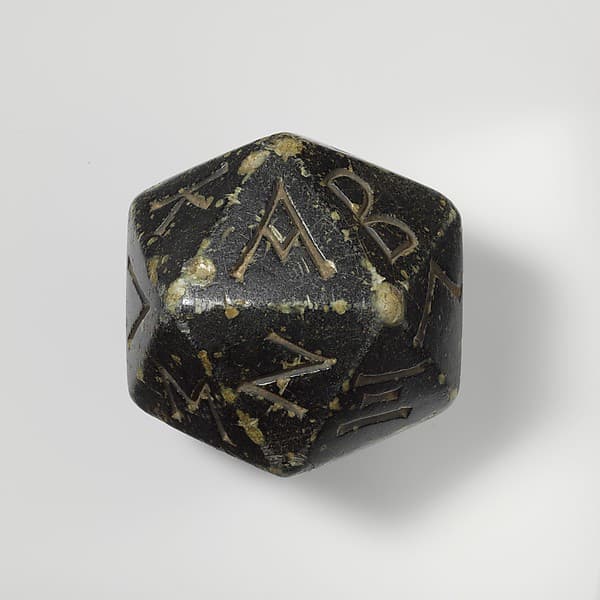
Greenstone polyhedron inscribed with letters of the Greek alphabet
Artist not stated in the record · 2nd–1st century BCE

Design for the Letter G of a Pictoral Alphabet: Greek Warfare
Victor Vincent Adam, French, 1801 – 1866 · ca. 1830
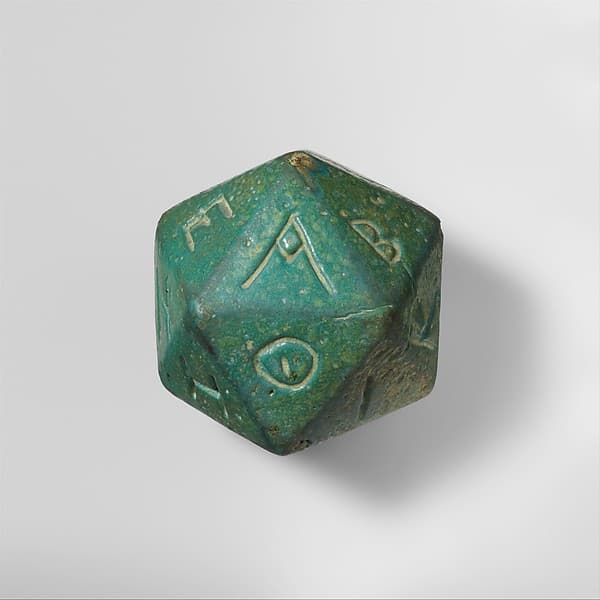
Faience polyhedron inscribed with letters of the Greek alphabet
Artist not stated in the record · 2nd–3rd century CE

Design for Monument
Felice Giani, Italian, 1758–1823 · ca. 1800
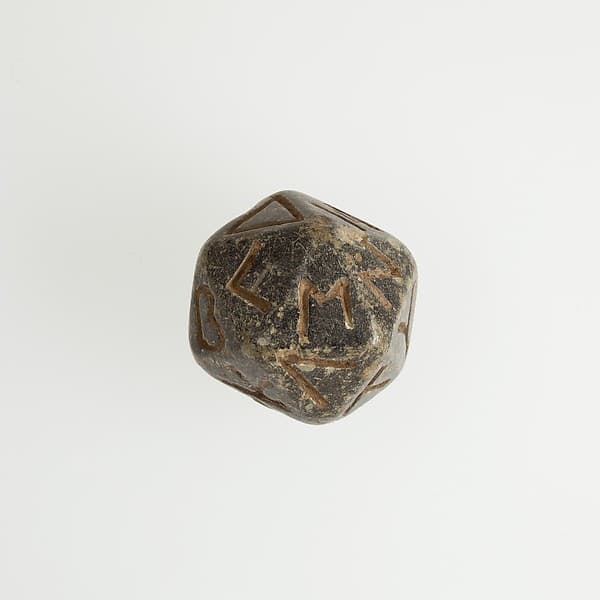
Twenty-sided die (icosahedron) with faces inscribed with Greek letters
Artist not stated in the record · ca. 2nd century BCE–4th century CE

Design for the letters V and X of a Pictoral Alphabet: Victoire/Xystus (Victory in the Xystus)
Victor Vincent Adam, French, 1801 – 1866 · ca. 1830
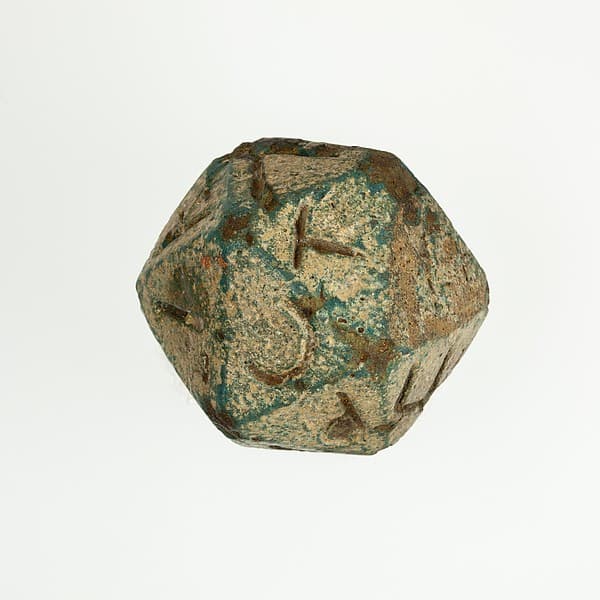
Twenty-sided die (icosahedron) with faces inscribed with Greek letters
Artist not stated in the record · ca. 2nd century BCE–4th century CE

Carved Inscriptions
Frederic Edwin Church, American, 1826–1900 · 1868
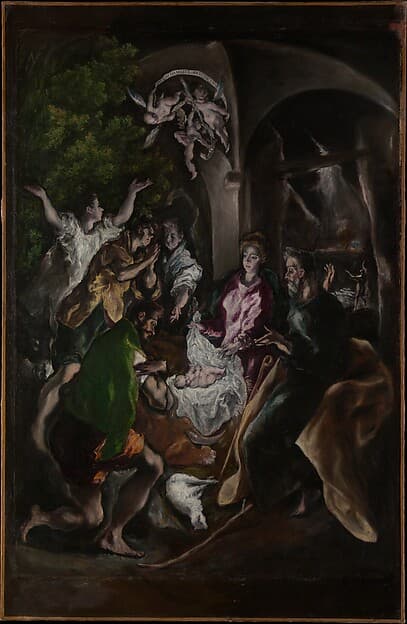
The Adoration of the Shepherds
El Greco (Domenikos Theotokopoulos) · ca. 1605–10

Book Ornament of a Classical Ruin with the Medallion Portrait of Francesco Algarotti (1712-1764)
Artist not stated in the record · ca. 1760
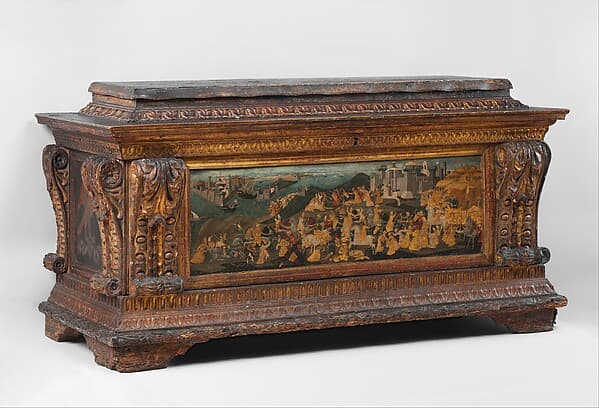
Cassone with painted front panel depicting the Conquest of Trebizond
Apollonio di Giovanni di Tomaso · after ca. 1461

Vase After the Antique
Aubert Henri Joseph A. Parent, French, 1753–1835 · 1789-1792
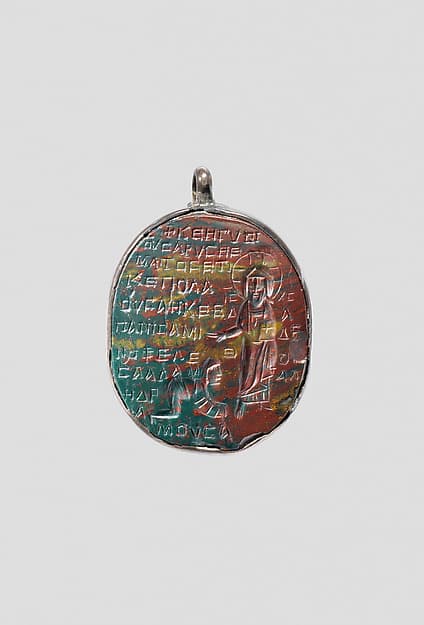
Amulet Carved in Intaglio (Incised)
Artist not stated in the record · 6th–7th century

Sampler
Artist not stated in the record · 1795
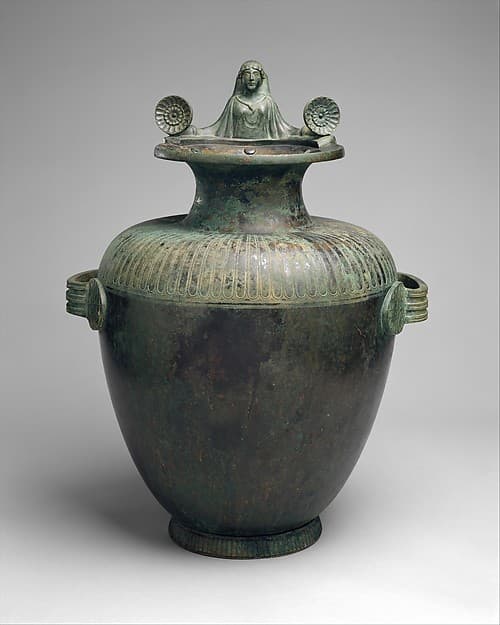
Bronze hydria (water jar)
Artist not stated in the record · mid-5th century BCE

Vase After the Antique
Aubert Henri Joseph A. Parent, French, 1753–1835 · 1789-1792
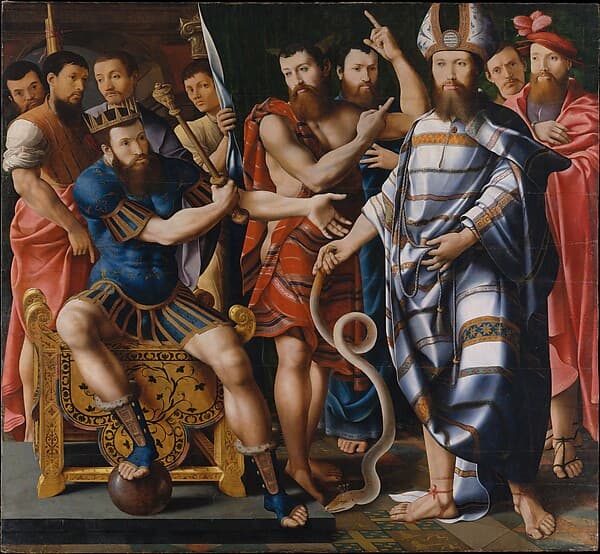
Moses and Aaron before Pharaoh: An Allegory of the Dinteville Family
Master of the Dinteville Allegory · 1537

Alphabet (Incunabulum page ?)
David Roelands, Dutch, b. 1572 · ca. 1615
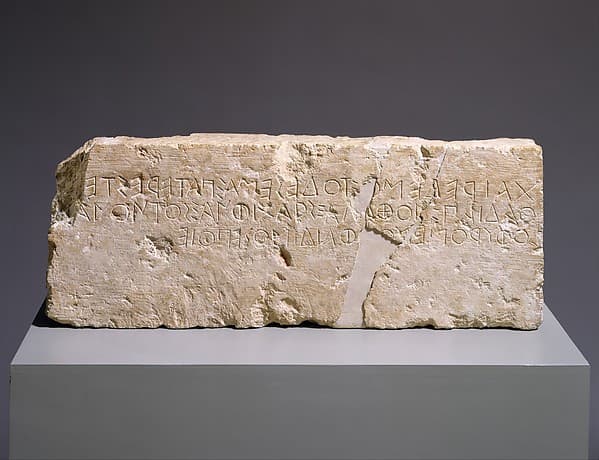
Front of a limestone block from the stepped base of a funerary monument
Phaidimos · mid-6th century BCE

Vase After the Antique
Aubert Henri Joseph A. Parent, French, 1753–1835 · 1789-1792
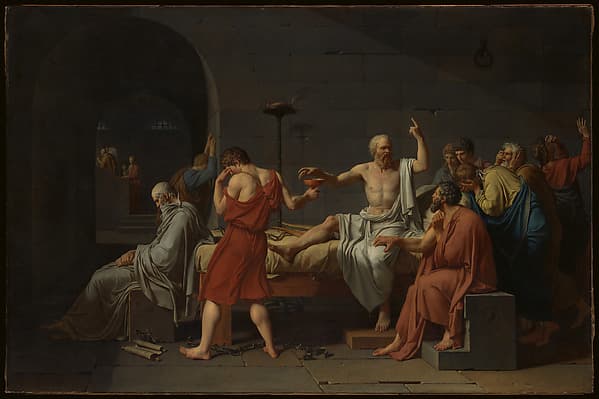
The Death of Socrates
Jacques Louis David · 1787

"Detail de la base des mats places sur le pont-neuf en Juillet 1838"
Félix Duban, French, 1797 - 1870 · 1838
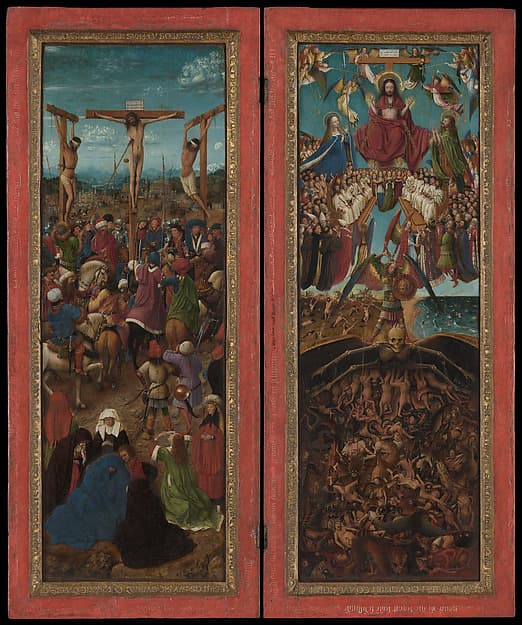
The Crucifixion; The Last Judgment
Jan van Eyck · ca. 1436–38
Where these records came from.
Two archives are wired, and only two. Each one is filtered on its own rights field — never on a title match, and never on the presence of an image file.
- The Met Collection API (Open Access)Rights field:
isPublicDomain. 131 matched · 24 examined · 2 dropped by the rights gate. Kept only where isPublicDomain === true and a file URL was published.12 shown - Smithsonian Open Access API (api.si.edu)Rights field:
content.descriptiveNonRepeating.metadata_usage.access. 3012699 matched · 40 examined · 29 dropped by the rights gate. Kept only where metadata_usage.access === "CC0" and an image resource was published.11 shown
These figures describe the pass run at 2026-09-04 14:04 UTC, during this request. A completed pass is kept for 24 hours and replayed for an identical search, which is what keeps repeated queries inside Smithsonian’s 30-requests-per-hour allowance. A pass in which either archive failed to answer is never kept — an outage must not be replayed as though it were a finding about the catalogue.
Wikimedia Commons and the Library of Congress are deliberately not wired. Wikimedia was confirmed, on a live query, to return CC-BY material inside the same result set as genuine public domain works, and filtering it safely has not been designed yet. loc.gov was blocked by bot detection during the source evaluation, so its rights vocabulary has never been observed — and nothing here is built on a field nobody has read.
An image file is a rights claim. It never travels without its field.