 Open
OpenTwo archives, queried live.
Every record below comes from The Met or Smithsonian Open Access and was filtered on that archive’s own rights field before it reached this page. 17 shown for “Plate with mandarin ducks and eight immortals” — 45 records examined, 14 dropped by the rights gate.
Archives queried 2026-08-29 06:16 UTC · fetched live for this request
isPublicDomain field is true for this object.metadata_usage.access reads CC0 — a waiver, not an expired term.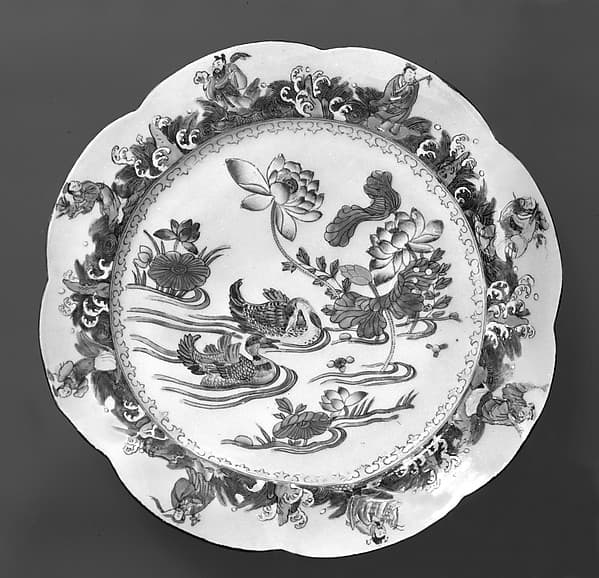
Plate with mandarin ducks and eight immortals
Artist not stated in the record · late 18th century

Rank badge
Artist not stated in the record · 19th century
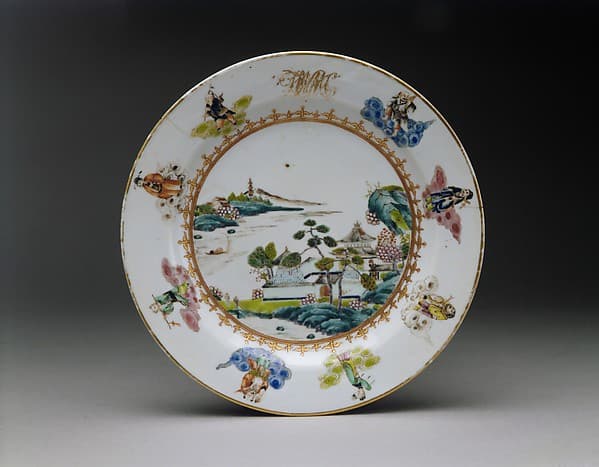
Dinner Plate
Artist not stated in the record · ca. 1796–1810

netsuke
Artist not stated in the record · 18th century
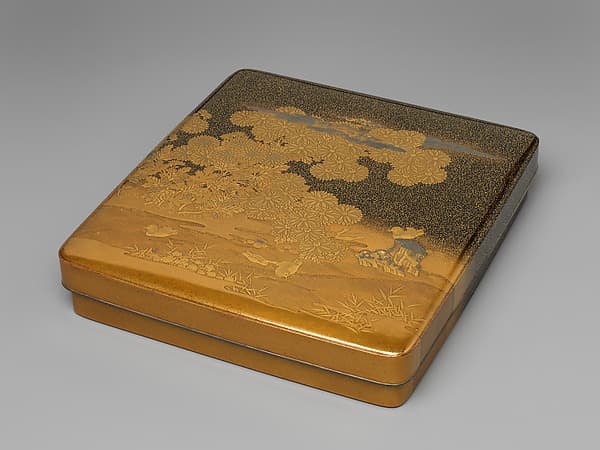
Writing box (suzuribako) with chrysanthemums and mandarin ducks
Igarashi Fujin 五十嵐不尽 · second half 17th–early 18th century

Kabuki players as the Eight Sennin (Triptych)
Kininaga, d. ca. 1820 · 1810–20
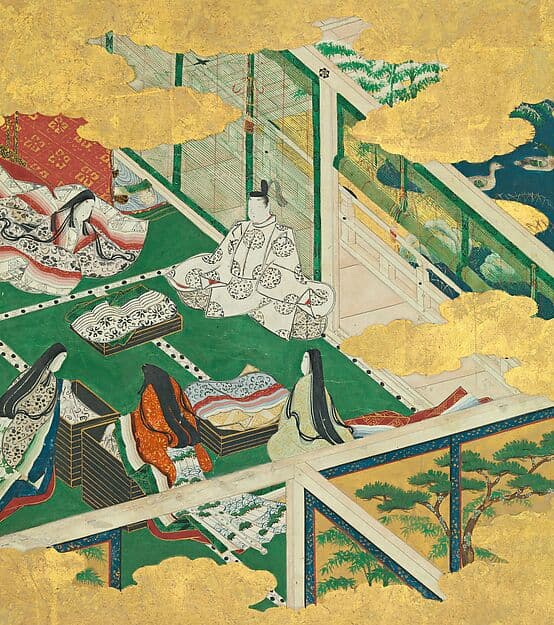
“A Lovely Garland” (Tamakazura), from The Tale of Genji
Tosa Mitsuyoshi 土佐光吉 · early 17th century

Rank badge
Artist not stated in the record · 19th century
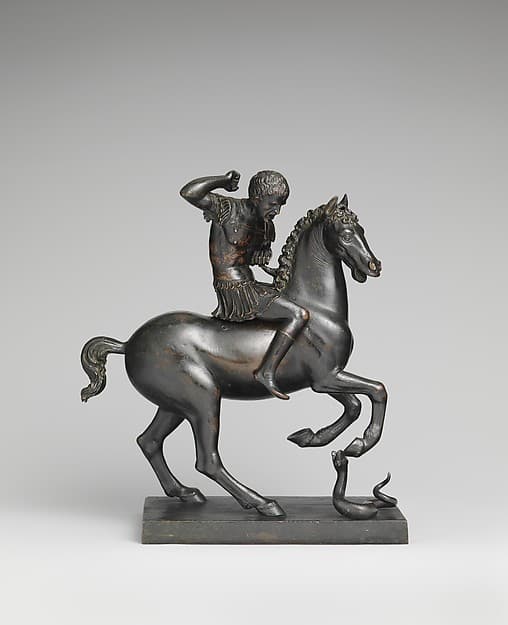
Horse and rider startled by a snake
Artist not stated in the record · early 16th century

Rank badge
Artist not stated in the record · 18th century

Mandarin d’Armes du Leaotung
Antoine Watteau, French, 1684–1721 · 1731

Plusieurs Pieces et Ornements Darquebuzerie Les plus en Usage tire des Ouvrages de Laurent le Languedoc Arquebuziers Du Roy et Dautres Ornement Inventé et gravé Par Simonin
Laurent Le Languedoc, French, active ca. 1684 – 1705 · 1705

Mandarin ducks under smartweed
Formerly attributed to Xu Xi (active mid-10th century) · 16th century

Mandarin ducks, rocks, and a flowering plant
Artist not stated in the record · 1368-1644

Mandarin ducks under smartweed
Formerly attributed to Huang Quan (903-968) · 15th-18th century

On one side mandarin ducks; on the other, poems, bamboos, storks, etc
Artist not stated in the record · 1615-1868

On one side mandarin ducks; on the other, poems, bamboos, storks, etc
Artist not stated in the record · 1615-1868
Where these records came from.
Two archives are wired, and only two. Each one is filtered on its own rights field — never on a title match, and never on the presence of an image file.
- The Met Collection API (Open Access)Rights field:
isPublicDomain. 5 matched · 5 examined · 0 dropped by the rights gate. Kept only where isPublicDomain === true and a file URL was published.5 shown - Smithsonian Open Access API (api.si.edu)Rights field:
content.descriptiveNonRepeating.metadata_usage.access. 1546029 matched · 40 examined · 14 dropped by the rights gate. Kept only where metadata_usage.access === "CC0" and an image resource was published.12 shown
These figures describe the pass run at 2026-08-29 06:16 UTC, during this request. A completed pass is kept for 24 hours and replayed for an identical search, which is what keeps repeated queries inside Smithsonian’s 30-requests-per-hour allowance. A pass in which either archive failed to answer is never kept — an outage must not be replayed as though it were a finding about the catalogue.
Wikimedia Commons and the Library of Congress are deliberately not wired. Wikimedia was confirmed, on a live query, to return CC-BY material inside the same result set as genuine public domain works, and filtering it safely has not been designed yet. loc.gov was blocked by bot detection during the source evaluation, so its rights vocabulary has never been observed — and nothing here is built on a field nobody has read.
An image file is a rights claim. It never travels without its field.