 Open
OpenTwo archives, queried live.
Every record below comes from The Met or Smithsonian Open Access and was filtered on that archive’s own rights field before it reached this page. 15 shown for “Sangallo family” — 63 records examined, 37 dropped by the rights gate.
Archives queried 2026-09-02 07:55 UTC · fetched live for this request
isPublicDomain field is true for this object.metadata_usage.access reads CC0 — a waiver, not an expired term.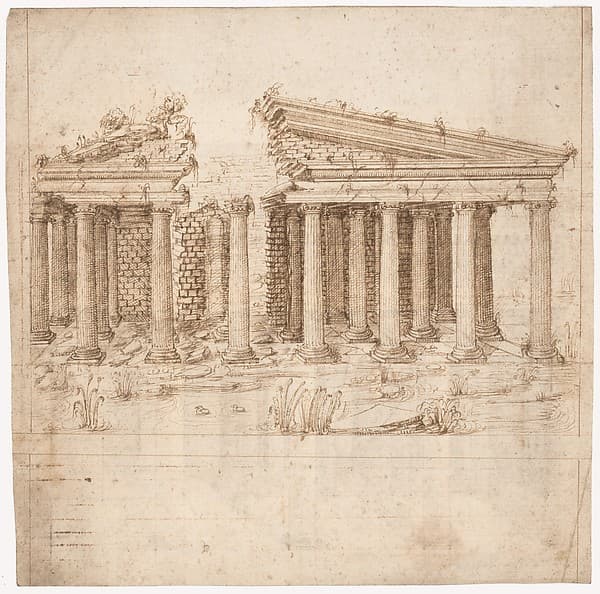
Recto: Front Elevation of a Roman Temple in Ruins (inspired by Giuliano da Sangallo); Verso: Elevation of the Nave of a Roman Basilica in Ruins (? the Basilica Giulia, inspired by Giuliano da Sangallo).
Sangallo family · 1530–45

Design for a Sepulchral Monument for a Medici Cardinal
Francesco da Sangallo, Italian, 1494 - 1576 · ca. 1560–70
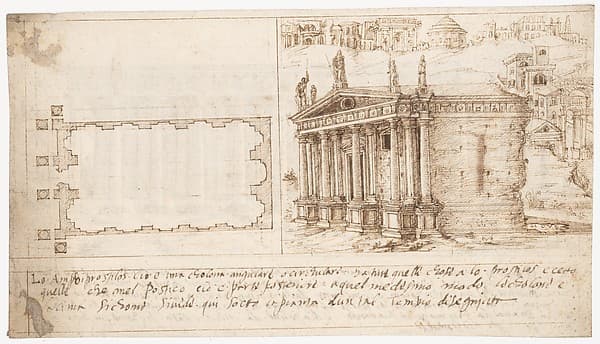
Recto: Temple Types: Amphiprostyle (Vitruvius, Book 3, Chapter 2, no. 4); Verso: Temple Types: Pseudodipteral (Vitruvius, Book 3, Chapter 2, no. 6).
Sangallo family · 1530–45

Broadside for the auction of 10 enslaved families in New Orleans
Artist not stated in the record · 1855
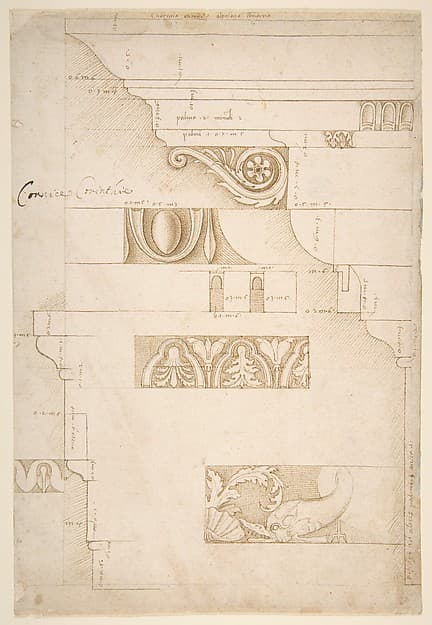
Architectural Study: The Measured Profiles of the Cornice and Entablature of the "Colonnacce" from the Forum Transitorium (the "Palace of Nerva")
Sangallo family · 1500–20

Family temperance pledge for Luther Miller Pulce and Irene Jenkins
Unidentified · October 30, 1902
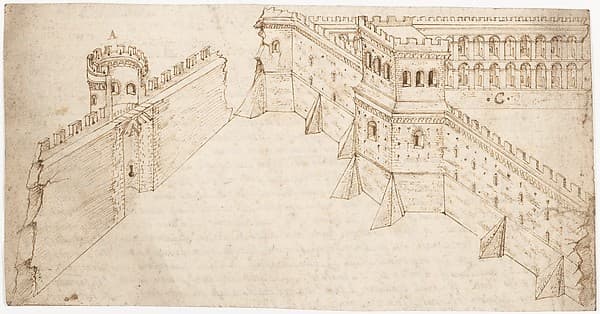
Recto: "Libro Primo, Chapo Quarto..." (Vitruvius, Book 1, Chapter 4); Verso: The Fortification of City Walls (Vitruvius, Book 1, Chapter 5).
Sangallo family · 1530–45
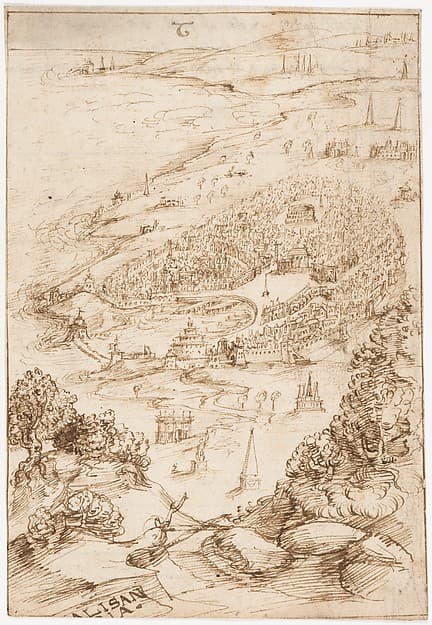
The Port City of Alexandria (? Allusion to Dinocrates's Building of Alexandria, Vitruvius, Book 2, introduction, no. 1) (recto); Fragmentary Writing ("Libro Primo...") (verso)
Sangallo family · 1530–45
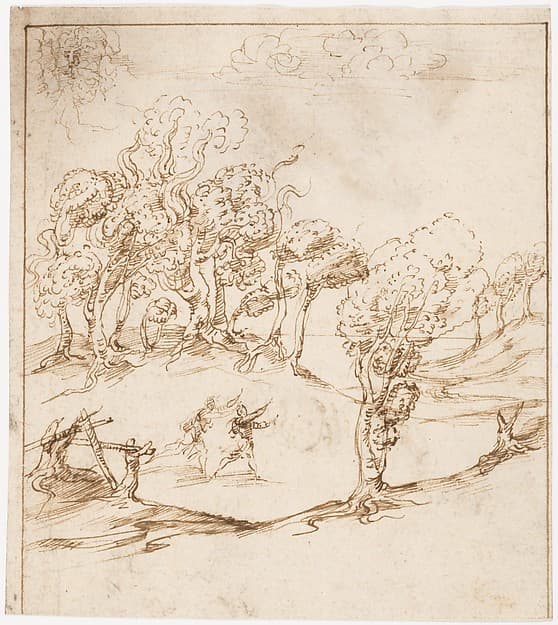
Recto: Landscape with Trees and Figures (? Remarks on the Winds and the Lay-out of the City; Vitruvius, Book 1, Chapter 6, nos. 2, 3): Verso: Blank.
Sangallo family · 1530–45
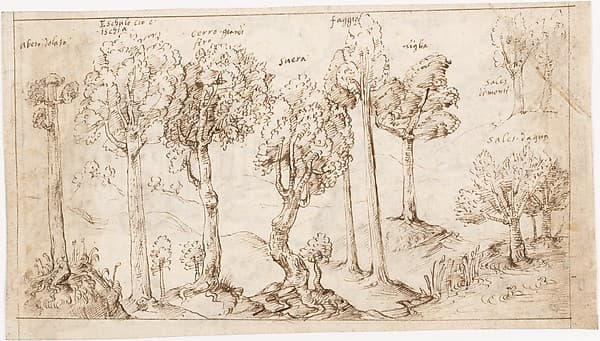
Recto: On Timber, the Species of Trees (Vitruvius, Book 2, Chapter 9, no. 4); Verso: On Timber, the Battle of Larignium (Vitruvius, Book 2, Chapter 9, no. 15)..
Sangallo family · 1530–45
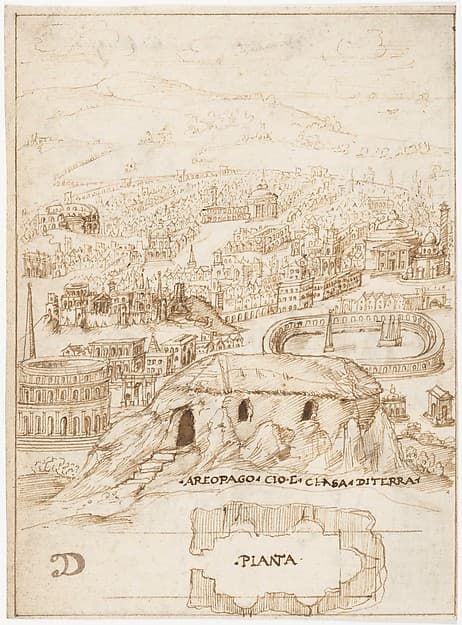
Recto: The Houses of the Barbarians (Vitruvius, Book 2, Chapter 1, nos. 3, 4); Verso: The Aeropagus in Athens with Cave Houses (Vitruvius, Book 2, Chapter 1, no. 5).
Sangallo family · 1530–45
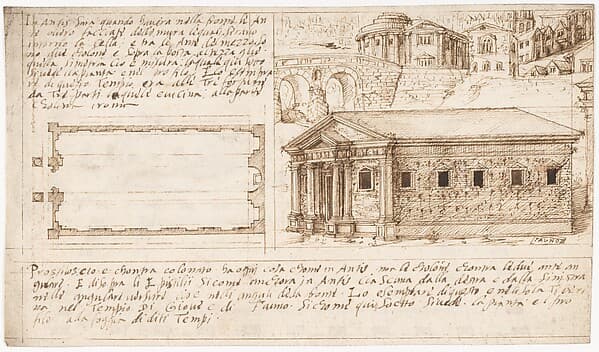
Recto: Temple Types: in Antis and Prostyle (Vitruvius, Book 3, Chapter 2, nos. 2, 3); Verso: Temple Types: Peripteral (Vitruvius, Book 3, Chapter 2, no. 5).
Sangallo family · 1530–45
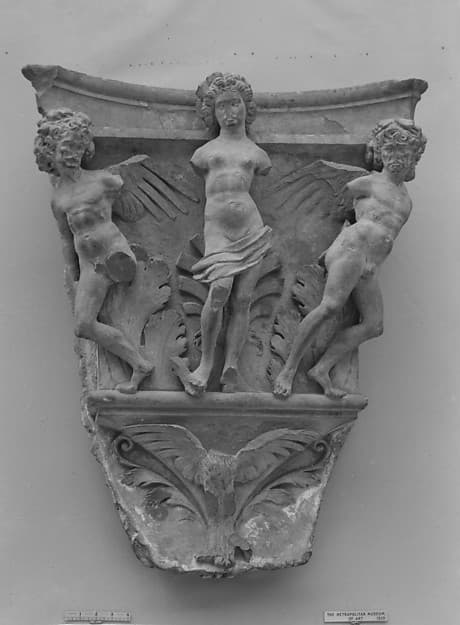
Corbel
Giuliano da Sangallo · late 15th century
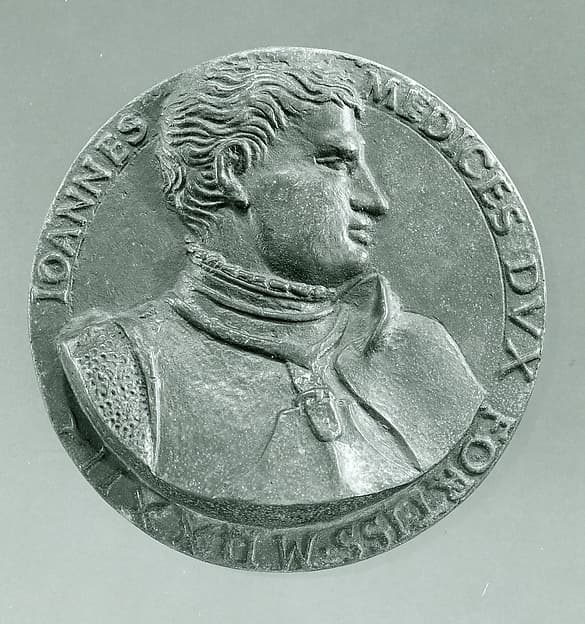
Medal: Giovanni de'Medici delle Bande Nere
Francesco da Sangallo · model 1522 or ca. 1570 (cast 16th century)
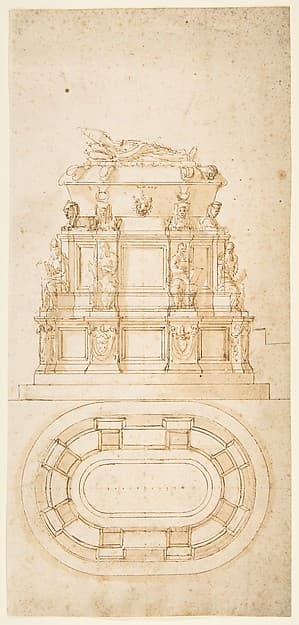
Design for a Freestanding Tomb Seen in Elevation and Plan
Antonio da Sangallo, the Younger · 1530–35
Where these records came from.
Two archives are wired, and only two. Each one is filtered on its own rights field — never on a title match, and never on the presence of an image file.
- The Met Collection API (Open Access)Rights field:
isPublicDomain. 23 matched · 23 examined · 0 dropped by the rights gate. Kept only where isPublicDomain === true and a file URL was published.12 shown - Smithsonian Open Access API (api.si.edu)Rights field:
content.descriptiveNonRepeating.metadata_usage.access. 24956 matched · 40 examined · 37 dropped by the rights gate. Kept only where metadata_usage.access === "CC0" and an image resource was published.3 shown
These figures describe the pass run at 2026-09-02 07:55 UTC, during this request. A completed pass is kept for 24 hours and replayed for an identical search, which is what keeps repeated queries inside Smithsonian’s 30-requests-per-hour allowance. A pass in which either archive failed to answer is never kept — an outage must not be replayed as though it were a finding about the catalogue.
Wikimedia Commons and the Library of Congress are deliberately not wired. Wikimedia was confirmed, on a live query, to return CC-BY material inside the same result set as genuine public domain works, and filtering it safely has not been designed yet. loc.gov was blocked by bot detection during the source evaluation, so its rights vocabulary has never been observed — and nothing here is built on a field nobody has read.
An image file is a rights claim. It never travels without its field.