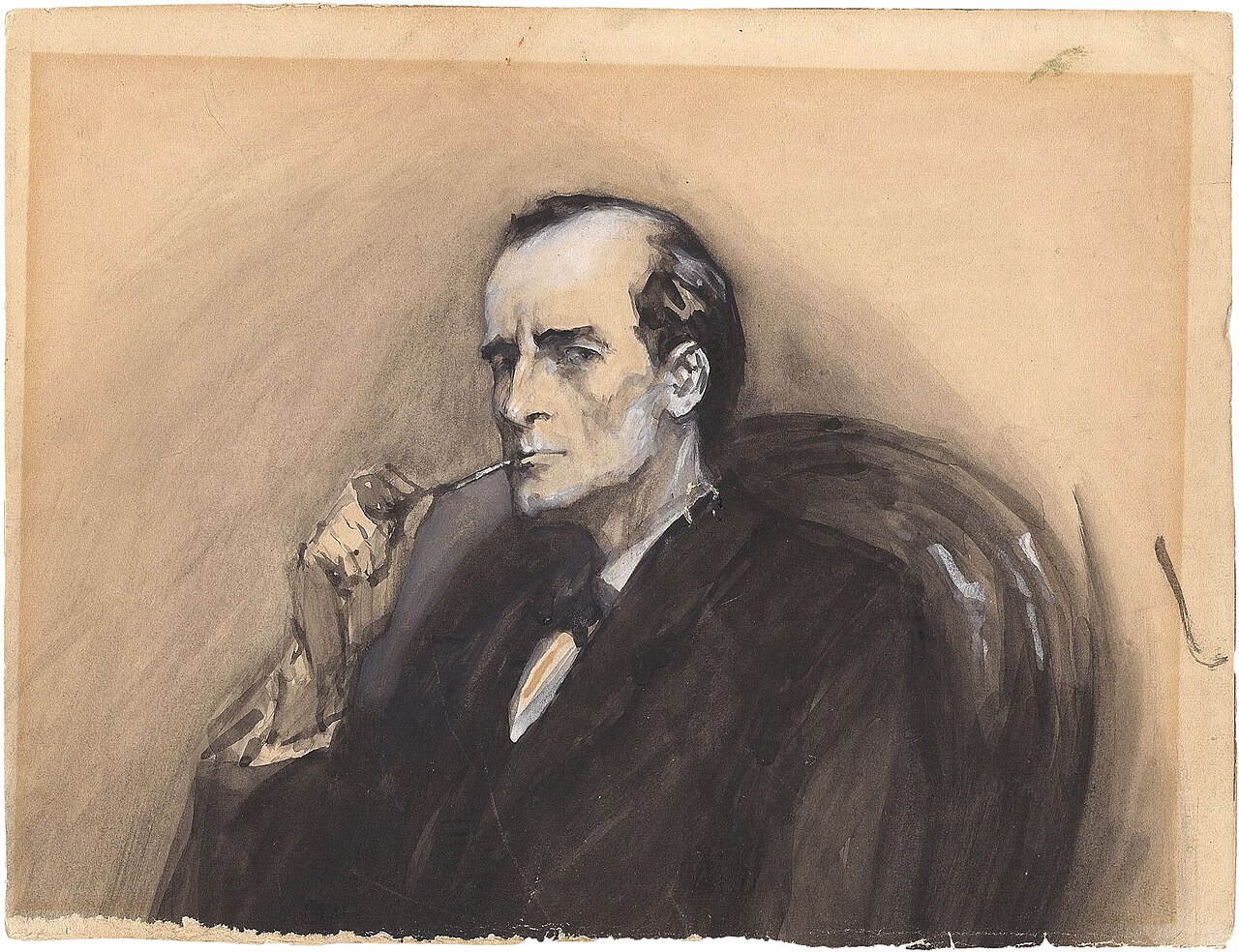
Free to use- The 56 short stories and 4 novels by Arthur Conan Doyle, published 1887–1927, under United States copyright law.
- This point is held back from the free entry and appears in full in the character's dossier.
- This point is held back from the free entry and appears in full in the character's dossier.
Not free to use- Any jurisdiction other than the United States.
- This point is held back from the free entry and appears in full in the character's dossier.
- This point is held back from the free entry and appears in full in the character's dossier.
4 more points on this determination are held back. The full list is in the full dossier →
About
Sherlock Holmes is the world’s most famous fictional detective, created by Scottish author and physician Arthur Conan Doyle. First appearing in the 1887 novel A Study in Scarlet, Holmes solved cases from his flat at 221B Baker Street alongside his friend and chronicler Dr. Watson, using a method of close observation and deduction that became the template for detective fiction ever after. Doyle wrote 56 short stories and four novels about him over four decades, and few literary characters have been reinterpreted on stage and screen as often.
Version scope
No caveat remains. As of January 1, 2023, the last Doyle stories (from The Case-Book of Sherlock Holmes, 1921–1927) cleared the 95-year US term. Before that date this was genuinely unsettled.
Trademark exposure
None significant. No single rights holder controls “Sherlock Holmes” as a brand.
Key case law
Klinger v. Conan Doyle Estate, Ltd., 755 F.3d 496 (7th Cir. 2014) — rejected the Estate’s theory that traits introduced in still-copyrighted late stories extended protection to the character himself.
Informational, not legal adviceThe demo’s “resolved” case — illustrates why version-by-version reasoning mattered for nearly a decade, and what fully cleared looks like once the calendar catches up. This determination is sourced and dated but is not a substitute for legal counsel — verify against primary sources before relying on it commercially.
The complete record: full publication history, the succession of rights holders, the term arithmetic, the expanded legal analysis, and the full source list available by unlocking the full dossier.
 Open