OpenGlyph — Catalogue of the American Public DomainJurisdiction: United StatesRev. 2026.08
Character indexEntry № 006
Character record

Winnie-the-Pooh

Reviewed 2026-08-10 · United States jurisdiction only · compiled from the sources listed in the margin

Partially free — version dependent
Confidence · High
Plate
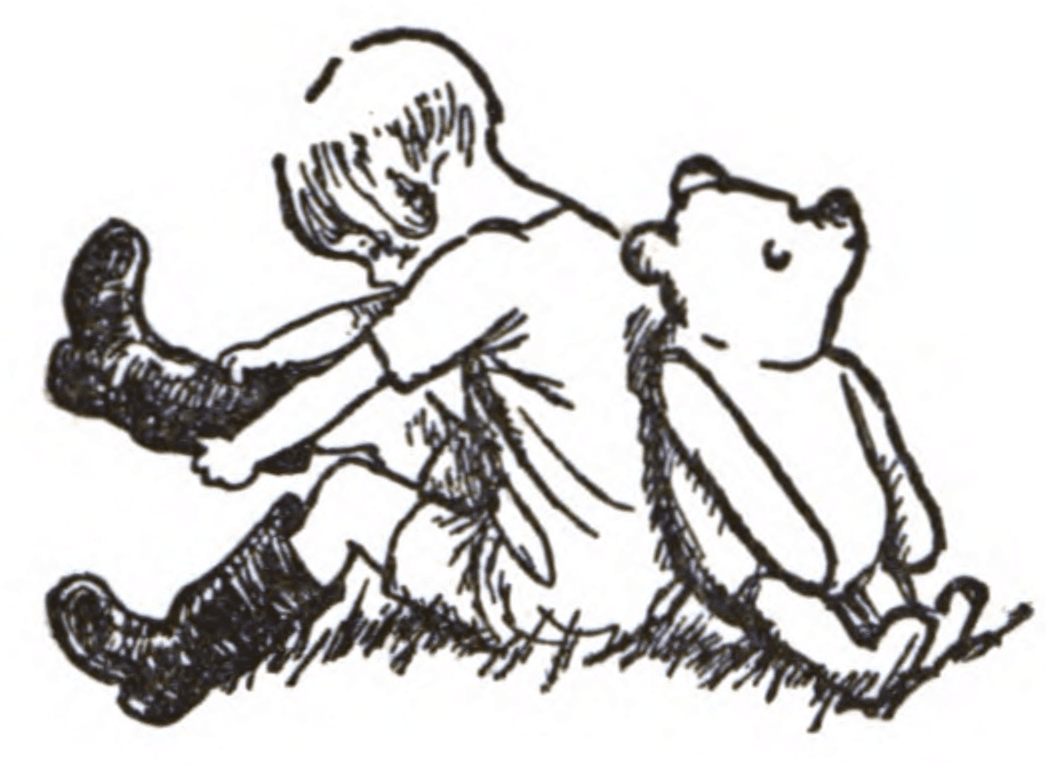
Pen-and-ink line drawing of Christopher Robin and Winnie-the-Pooh sitting back to back on the grass.
Christopher Robin and Pooh — E. H. Shepard line drawing from Winnie-the-Pooh (1926)Ernest H. Shepard (d. 1976)A. A. Milne, Winnie-the-Pooh, first published 1926 (Methuen, London; E. P. Dutton, New York)Archive file page →Public domain in the US — Wikimedia Commons, tagged {{PD-old-auto-expired}} with {{Simultaneous US publication}}
First appearance1926 — Winnie-the-Pooh
Source workWinnie-the-Pooh (1926); The House at Pooh Corner (1928)
Rights holderA. A. Milne (d. 1956); character designs also licensed/trademarked by Disney
JurisdictionUnited States
RelatedChristopher Robin, Tigger, Kanga, Roo
Free to use
  • Winnie-the-Pooh (1926) — Milne’s text and Shepard’s illustrations — under US copyright law, from January 1, 2022.
  • The House at Pooh Corner (1928), including Tigger, from January 1, 2024.
  • The characters as depicted and described in those two books.
Not free to use
  • Disney’s Pooh character designs, created from 1961 onwards, which remain under copyright.
  • Disney trademarks covering the property and its designs.
  • Milne’s and Shepard’s other works, and any later adaptation, each with its own term.
  • Any jurisdiction other than the United States. UK copyright in Milne’s work runs on a life-plus-70 clock, not this one.

About

Winnie-the-Pooh is the gentle, honey-loving bear at the center of A. A. Milne’s Hundred Acre Wood, inspired by a real teddy bear owned by Milne’s son, Christopher Robin. Introduced in the 1926 book Winnie-the-Pooh and illustrated by E. H. Shepard, Pooh and his friends — Piglet, Eeyore, Owl, Kanga, Roo, and later Tigger — became one of the best-loved casts in children’s literature and one of Disney’s most enduring licensed properties.

Version scope

Pooh, Piglet, Rabbit, Eeyore, Kanga, Roo, and Owl entered US public domain January 1, 2022. Tigger is NOT included — introduced in the 1928 sequel, his date is January 1, 2024, two years later than the rest of the cast.

Trademark exposure

High. Disney holds trademarks tied to its own licensed character designs, unaffected by the Milne text/illustrations entering the public domain.

Key case law

No major litigation. The 2022 clearance produced Winnie-the-Pooh: Blood and Honey (2023) as a widely publicized test of what the status actually permits.

Informational, not legal advice

Good “ensemble” example — a public-domain date applies per-character, not per-franchise. Tigger’s 2-year lag is the detail naive sources miss. This determination is sourced and dated but is not a substitute for legal counsel — verify against primary sources before relying on it commercially.

The complete record: full publication history, the succession of rights holders, the term arithmetic, the expanded legal analysis, and the full source list — already compiled and reviewed, just held back from this page by default.

Downloadables

Everything in this entry, individually.

Each item carries the citation it was compiled from. Nothing is served here whose own rights status has not been checked separately from the character’s.

Item 01 — PlatePNG · 1046 × 765 px

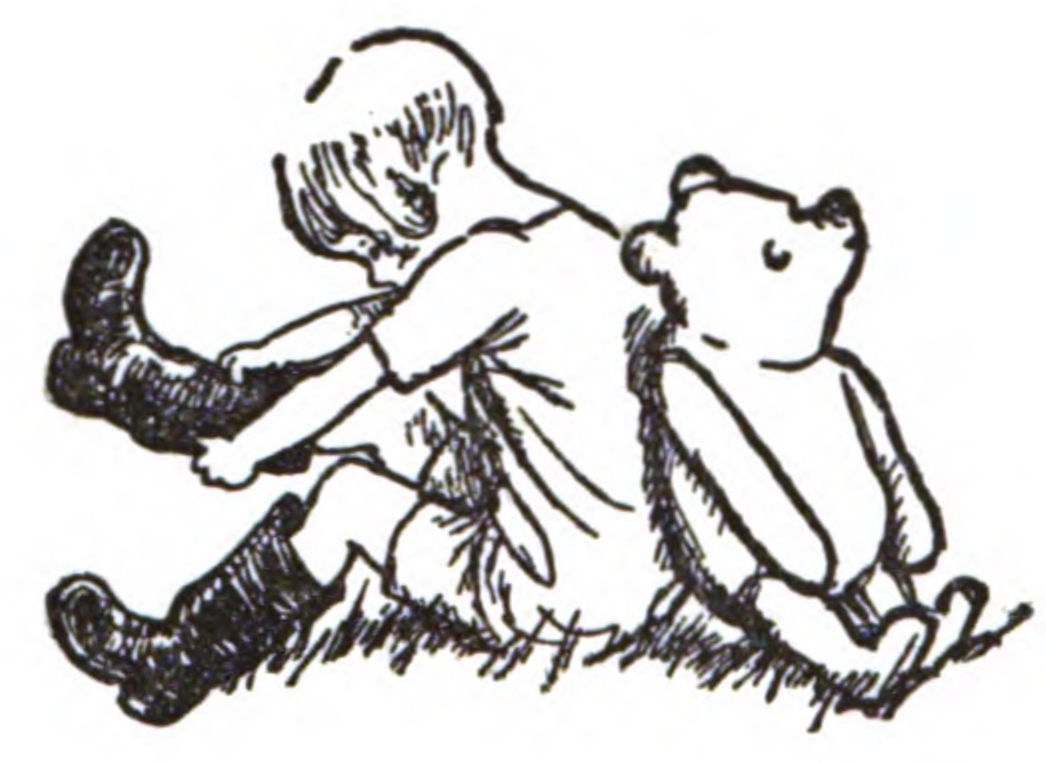
Christopher Robin and Pooh — E. H. Shepard line drawing from Winnie-the-Pooh (1926)

Ernest H. Shepard (d. 1976). A. A. Milne, Winnie-the-Pooh, first published 1926 (Methuen, London; E. P. Dutton, New York), 1926. Public domain in the US — Wikimedia Commons, tagged {{PD-old-auto-expired}} with {{Simultaneous US publication}}. Archive file page.

Why this file is free to useThe 1926 book was published simultaneously in the United Kingdom and the United States, so it carries a US term of 95 years from 1926: expired December 31, 2021, public domain from January 1, 2022. This is Shepard’s original 1926 line art, the version that actually cleared. Deliberately avoided: any Disney-designed Pooh, which is a separate and still-protected design lineage and is exactly the trap this catalogue exists to catch.

Item 02 — Full dossierPrint / Save as PDF

Winnie-the-Pooh — complete record

The complete record: full publication history, the succession of rights holders, the term arithmetic, the expanded legal analysis, and the full source list — already compiled and reviewed, just held back from this page by default. Formatted for printing — use your browser’s Print dialog and choose “Save as PDF”.

Read before relying on itInformational, not legal advice. The dossier states its jurisdiction (United States), its review date, and its confidence value on the first page.